Welcome back to the table. We are now looking at the absolute climax of . JesusJesus of Nazareth, also called the Christ or the Messiah, is the central figure of the New Testament and the fulfillment of God’s redemptive plan. Born in the line of David, He taught with divine authority, performed miracles, and revealed the kingdom of God. More has just dismantled the political trap of the HerodiansThe Herodians were a political faction in first‑century Judea aligned with the dynasty of Herod. They were not a religious sect but a group loyal to Herod’s rule and Roman authority. Their alliance with the Pharisees against Jesus reveals how political power can merge with religious influence to oppose God’s truth. More (Taxes), the biological trap of the SadduceesThe Sadducees were a wealthy, aristocratic Jewish sect during the Second Temple period, known for rejecting the resurrection, denying angels and spirits, and limiting their authority to the written Torah. Their confrontations with Jesus reveal theological blindness rooted in a restricted canon. More (The ResurrectionResurrection is God’s act of raising the dead to new life — first seen in Christ’s victory over the grave, and ultimately fulfilled when all humanity is raised for judgment, transformation, and eternal destiny. More), and the legal trap of the PhariseesThe Pharisees were a prominent Jewish religious sect during the Second Temple period, known for their strict adherence to oral tradition, legal precision, and public displays of righteousness. They frequently clashed with Jesus, whose teachings exposed their hypocrisy, spiritual blindness, and misuse of Scripture. More (The Greatest CommandmentThe Greatest Commandment is Jesus’ authoritative summary of the entire Torah and Prophets. It begins with the Shema — “The LORD our God, the LORD is one” — and commands total love for God with heart, soul, mind, and strength, followed by love for neighbor. Jesus reveals this twofold command as the load‑bearing pillar upon which all Scripture structurally “hangs.” More).
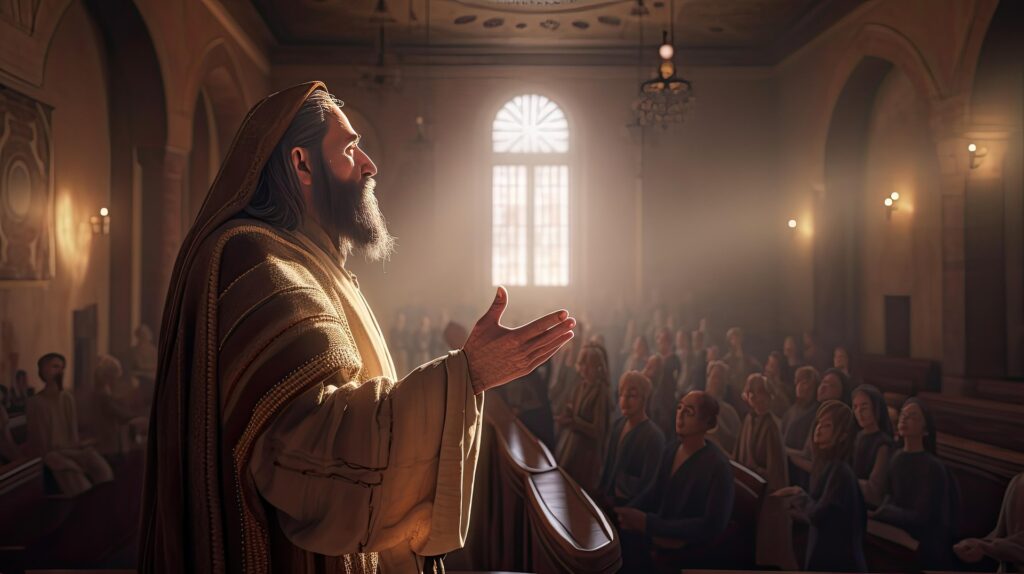
Now, the JesusJesus of Nazareth, also called the Christ or the Messiah, is the central figure of the New Testament and the fulfillment of God’s redemptive plan. Born in the line of David, He taught with divine authority, performed miracles, and revealed the kingdom of God. More goes on the offensive. He turns to the PhariseesThe Pharisees were a prominent Jewish religious sect during the Second Temple period, known for their strict adherence to oral tradition, legal precision, and public displays of righteousness. They frequently clashed with Jesus, whose teachings exposed their hypocrisy, spiritual blindness, and misuse of Scripture. More and asks them a single, devastating question that completely crashes their theological trap: “Whose Son Is the ChristJesus of Nazareth, also called the Christ or the Messiah, is the central figure of the New Testament and the fulfillment of God’s redemptive plan. Born in the line of David, He taught with divine authority, performed miracles, and revealed the kingdom of God. More?“
Let’s run the exact physical, genetic, and linguistic diagnostic on this interaction to see how JesusJesus of Nazareth, also called the Christ or the Messiah, is the central figure of the New Testament and the fulfillment of God’s redemptive plan. Born in the line of David, He taught with divine authority, performed miracles, and revealed the kingdom of God. More proved His dual nature using their own scriptures.
1. The Setup: The Genetic Requirement
In (KJV), JesusJesus of Nazareth, also called the Christ or the Messiah, is the central figure of the New Testament and the fulfillment of God’s redemptive plan. Born in the line of David, He taught with divine authority, performed miracles, and revealed the kingdom of God. More asks the PhariseesThe Pharisees were a prominent Jewish religious sect during the Second Temple period, known for their strict adherence to oral tradition, legal precision, and public displays of righteousness. They frequently clashed with Jesus, whose teachings exposed their hypocrisy, spiritual blindness, and misuse of Scripture. More:
“What think ye of ChristJesus of Nazareth, also called the Christ or the Messiah, is the central figure of the New Testament and the fulfillment of God’s redemptive plan. Born in the line of David, He taught with divine authority, performed miracles, and revealed the kingdom of God. More? whose son is he? They say unto him, The son of DavidDavid is Israel’s second king — a shepherd, warrior, poet, and the central human figure in the Messianic line. Scripture presents him as “a man after God’s own heart,” whose life reveals covenant loyalty, repentance, worship, and the promise of an everlasting throne. More.”
The PhariseesThe Pharisees were a prominent Jewish religious sect during the Second Temple period, known for their strict adherence to oral tradition, legal precision, and public displays of righteousness. They frequently clashed with Jesus, whose teachings exposed their hypocrisy, spiritual blindness, and misuse of Scripture. More answered correctly based on their scripture. In , God promised King DavidDavid is Israel’s second king — a shepherd, warrior, poet, and the central human figure in the Messianic line. Scripture presents him as “a man after God’s own heart,” whose life reveals covenant loyalty, repentance, worship, and the promise of an everlasting throne. More that his biological descendant would sit on the throne forever. Therefore, the Messiah must possess the exact genetic, biological blood of the line of DavidDavid is Israel’s second king — a shepherd, warrior, poet, and the central human figure in the Messianic line. Scripture presents him as “a man after God’s own heart,” whose life reveals covenant loyalty, repentance, worship, and the promise of an everlasting throne. More.
But the PhariseesThe Pharisees were a prominent Jewish religious sect during the Second Temple period, known for their strict adherence to oral tradition, legal precision, and public displays of righteousness. They frequently clashed with Jesus, whose teachings exposed their hypocrisy, spiritual blindness, and misuse of Scripture. More had flattened the MessiahMessiah means “Anointed One,” the promised deliverer foretold throughout the Hebrew Scriptures. In the New Testament, Jesus is revealed as this Messiah — the fulfillment of prophecy, the bearer of God’s kingdom, and the one who accomplishes redemption through His life, death, and resurrection (Isaiah 9:6–7; Daniel 9:25; John 4:25–26). More into a mere human political figure. They were looking for a military warlord with David’s DNA to overthrow the Roman Empire. They completely ignored the higher-dimensional, divine requirements of the ChristJesus of Nazareth, also called the Christ or the Messiah, is the central figure of the New Testament and the fulfillment of God’s redemptive plan. Born in the line of David, He taught with divine authority, performed miracles, and revealed the kingdom of God. More.
2. The Trap Reversed: The Patriarchal Paradox
JesusJesus of Nazareth, also called the Christ or the Messiah, is the central figure of the New Testament and the fulfillment of God’s redemptive plan. Born in the line of David, He taught with divine authority, performed miracles, and revealed the kingdom of God. More immediately traps them in a cultural and biological paradox using their own revered King.
(KJV):
“He saith unto them, How then doth DavidDavid is Israel’s second king — a shepherd, warrior, poet, and the central human figure in the Messianic line. Scripture presents him as “a man after God’s own heart,” whose life reveals covenant loyalty, repentance, worship, and the promise of an everlasting throne. More in spirit call him Lord, saying, The LORD said unto my Lord, Sit thou on my right hand, till I make thine enemies thy footstool? If DavidDavid is Israel’s second king — a shepherd, warrior, poet, and the central human figure in the Messianic line. Scripture presents him as “a man after God’s own heart,” whose life reveals covenant loyalty, repentance, worship, and the promise of an everlasting throne. More then call him Lord, how is he his son?”
To understand why this left the brightest minds in JudeaJudea was the southern region of ancient Israel during the time of Jesus, governed by Rome and centered around Jerusalem and the Temple. It formed the political, religious, and cultural heart of Jewish life, and serves as the primary setting for Jesus’ ministry, His trial, and the early church. More completely speechless (verse 46: “And no man was able to answer him a word”), you have to understand ancient Near Eastern patriarchalPatriarchal refers to the period, culture, and social structure shaped by the early fathers of Israel — Abraham, Isaac, and Jacob. It describes the family‑based leadership, covenant traditions, and ancient Near Eastern customs that defined life before the Mosaic Law (Genesis 12–50). More culture.
The Cultural Law: In a strict patriarchalPatriarchal refers to the period, culture, and social structure shaped by the early fathers of Israel — Abraham, Isaac, and Jacob. It describes the family‑based leadership, covenant traditions, and ancient Near Eastern customs that defined life before the Mosaic Law (Genesis 12–50). More society, the ancestor (the father/grandfather) is always superior to the descendant. A patriarch would never look down his genealogical tree and call his great-great-grandson “Lord” or “Master.” The descendant honors the ancestor, not the other way around.
If the MessiahMessiah means “Anointed One,” the promised deliverer foretold throughout the Hebrew Scriptures. In the New Testament, Jesus is revealed as this Messiah — the fulfillment of prophecy, the bearer of God’s kingdom, and the one who accomplishes redemption through His life, death, and resurrection (Isaiah 9:6–7; Daniel 9:25; John 4:25–26). More was only a human descendant of DavidDavid is Israel’s second king — a shepherd, warrior, poet, and the central human figure in the Messianic line. Scripture presents him as “a man after God’s own heart,” whose life reveals covenant loyalty, repentance, worship, and the promise of an everlasting throne. More, DavidDavid is Israel’s second king — a shepherd, warrior, poet, and the central human figure in the Messianic line. Scripture presents him as “a man after God’s own heart,” whose life reveals covenant loyalty, repentance, worship, and the promise of an everlasting throne. More would never have called him “Lord.”
3. The Linguistic Source Code (Psalm 110)
JesusJesus of Nazareth, also called the Christ or the Messiah, is the central figure of the New Testament and the fulfillment of God’s redemptive plan. Born in the line of David, He taught with divine authority, performed miracles, and revealed the kingdom of God. More is quoting directly from . To decode the physics of what DavidDavid is Israel’s second king — a shepherd, warrior, poet, and the central human figure in the Messianic line. Scripture presents him as “a man after God’s own heart,” whose life reveals covenant loyalty, repentance, worship, and the promise of an everlasting throne. More actually saw, we must look at the original HebrewHebrew is the ancient language of the people of Israel and the primary language in which most of the Old Testament was originally written. As a member of the Northwest Semitic language family, Hebrew contains rich layers of meaning that provide deeper insight into Scripture, biblical names, prophecy, covenant theology, and God's revelation to His people. More text that DavidDavid is Israel’s second king — a shepherd, warrior, poet, and the central human figure in the Messianic line. Scripture presents him as “a man after God’s own heart,” whose life reveals covenant loyalty, repentance, worship, and the promise of an everlasting throne. More wrote.
In English, it reads: “The LORD said unto my Lord…” In the original HebrewHebrew is the ancient language of the people of Israel and the primary language in which most of the Old Testament was originally written. As a member of the Northwest Semitic language family, Hebrew contains rich layers of meaning that provide deeper insight into Scripture, biblical names, prophecy, covenant theology, and God's revelation to His people. More source code, it reads: “YHVHYHVH is the sacred four‑letter name of God in Hebrew — the Tetragrammaton — revealing the eternal, self‑existent, covenant God of Israel. It expresses His identity as “I AM,” the One who was, who is, and who will be. More said unto my AdoniAdoni means “my lord” and is the Hebrew term used in Psalm 110:1 to describe the Messiah as David’s sovereign ruler. It is a title of authority applied to human kings, masters, and—uniquely in this case—the future descendant who is also David’s eternal Lord. More…”
-
YHVHYHVH is the sacred four‑letter name of God in Hebrew — the Tetragrammaton — revealing the eternal, self‑existent, covenant God of Israel. It expresses His identity as “I AM,” the One who was, who is, and who will be. More (The Tetragrammaton): The eternal, uncreated Master Architect of the universe.
-
AdoniAdoni means “my lord” and is the Hebrew term used in Psalm 110:1 to describe the Messiah as David’s sovereign ruler. It is a title of authority applied to human kings, masters, and—uniquely in this case—the future descendant who is also David’s eternal Lord. More: A title of ultimate sovereignty, mastery, and lordship.
Under the inspiration of the Holy Spirit, DavidDavid is Israel’s second king — a shepherd, warrior, poet, and the central human figure in the Messianic line. Scripture presents him as “a man after God’s own heart,” whose life reveals covenant loyalty, repentance, worship, and the promise of an everlasting throne. More was looking into the higher-dimensional throne room of heaven. He saw two distinct, sovereign, divine entities communicating. DavidDavid is Israel’s second king — a shepherd, warrior, poet, and the central human figure in the Messianic line. Scripture presents him as “a man after God’s own heart,” whose life reveals covenant loyalty, repentance, worship, and the promise of an everlasting throne. More recognized that his future genetic descendant (AdoniAdoni means “my lord” and is the Hebrew term used in Psalm 110:1 to describe the Messiah as David’s sovereign ruler. It is a title of authority applied to human kings, masters, and—uniquely in this case—the future descendant who is also David’s eternal Lord. More) was simultaneously his eternal Creator.
4. The Biological Physics: The Root and the Offspring
How is it biologically and physically possible to be both the ancestor and the descendant of the same man?
JesusJesus of Nazareth, also called the Christ or the Messiah, is the central figure of the New Testament and the fulfillment of God’s redemptive plan. Born in the line of David, He taught with divine authority, performed miracles, and revealed the kingdom of God. More answers this exact paradox decades later in (NIV):
“I am the root and the offspring of DavidDavid is Israel’s second king — a shepherd, warrior, poet, and the central human figure in the Messianic line. Scripture presents him as “a man after God’s own heart,” whose life reveals covenant loyalty, repentance, worship, and the promise of an everlasting throne. More, and the bright Morning Star.”
This is the ultimate description of the “Dual Nature” of ChristJesus of Nazareth, also called the Christ or the Messiah, is the central figure of the New Testament and the fulfillment of God’s redemptive plan. Born in the line of David, He taught with divine authority, performed miracles, and revealed the kingdom of God. More (fully God, fully man), explained through botanical physics.
-
The Root (The Creator): A root is the source. It comes before the tree. As the eternal Logos (), JesusJesus of Nazareth, also called the Christ or the Messiah, is the central figure of the New Testament and the fulfillment of God’s redemptive plan. Born in the line of David, He taught with divine authority, performed miracles, and revealed the kingdom of God. More is the Creator of DavidDavid is Israel’s second king — a shepherd, warrior, poet, and the central human figure in the Messianic line. Scripture presents him as “a man after God’s own heart,” whose life reveals covenant loyalty, repentance, worship, and the promise of an everlasting throne. More. He designed David’s DNA. He is David’s Lord.
-
The Offspring (The Biology): A branch comes after the tree. In order to legally redeem the physical world, the Creator had to step inside His own creation. He borrowed the biological hardware of Mary (a descendant of DavidDavid is Israel’s second king — a shepherd, warrior, poet, and the central human figure in the Messianic line. Scripture presents him as “a man after God’s own heart,” whose life reveals covenant loyalty, repentance, worship, and the promise of an everlasting throne. More) to acquire the authorized genetic “flesh and bone” required to act as the Kinsman Redeemer.
A Visual Comparison: Imagine a lead programmer who writes the code for a massive, complex virtual reality simulation (The Root). Because the simulation has become corrupted with a virus, the programmer writes an avatar of himself directly into the code (The Offspring). He is simultaneously the creator of the world and a character operating inside it. He is both David’s Lord and David’s Son.
5. The Institutional Audit: Why were the Pharisees blind?
Why couldn’t the PhariseesThe Pharisees were a prominent Jewish religious sect during the Second Temple period, known for their strict adherence to oral tradition, legal precision, and public displays of righteousness. They frequently clashed with Jesus, whose teachings exposed their hypocrisy, spiritual blindness, and misuse of Scripture. More solve this riddle? Because they had deliberately restricted their canonical database.
If we look at the Ethiopian Orthodox CanonThe Ethiopian Canon is the largest and most ancient Christian biblical canon still in use, preserving books long lost in Western traditions and maintaining a textual lineage rooted in early Ge’ez manuscripts. More, specifically the Book of EnochEnoch is the pre‑Flood patriarch who “walked with God” and was taken without seeing death. In biblical theology, he becomes the earliest prophetic witness to the rebellion of the Watchers, the coming judgment, and the structure of the unseen realm. More, the dual nature of the MessiahMessiah means “Anointed One,” the promised deliverer foretold throughout the Hebrew Scriptures. In the New Testament, Jesus is revealed as this Messiah — the fulfillment of prophecy, the bearer of God’s kingdom, and the one who accomplishes redemption through His life, death, and resurrection (Isaiah 9:6–7; Daniel 9:25; John 4:25–26). More is explicitly detailed. In 1 EnochEnoch is the pre‑Flood patriarch who “walked with God” and was taken without seeing death. In biblical theology, he becomes the earliest prophetic witness to the rebellion of the Watchers, the coming judgment, and the structure of the unseen realm. More 46 and 48, EnochEnoch is the pre‑Flood patriarch who “walked with God” and was taken without seeing death. In biblical theology, he becomes the earliest prophetic witness to the rebellion of the Watchers, the coming judgment, and the structure of the unseen realm. More is shown the “Son of Man” (the exact title JesusJesus of Nazareth, also called the Christ or the Messiah, is the central figure of the New Testament and the fulfillment of God’s redemptive plan. Born in the line of David, He taught with divine authority, performed miracles, and revealed the kingdom of God. More used for Himself). EnochEnoch is the pre‑Flood patriarch who “walked with God” and was taken without seeing death. In biblical theology, he becomes the earliest prophetic witness to the rebellion of the Watchers, the coming judgment, and the structure of the unseen realm. More describes this Son of Man as a pre-existent, divine entity who was hidden with the Lord of SpiritsLord of Spirits is a divine title emphasizing God’s supreme authority over all spiritual beings — angels, watchers, principalities, powers, and the entire unseen realm. It appears prominently in ancient Jewish literature and aligns with the biblical portrayal of God as ruler of heaven and earth. More before the sun and the stars were created, yet who would be a staff to the righteous on earth.
The PhariseesThe Pharisees were a prominent Jewish religious sect during the Second Temple period, known for their strict adherence to oral tradition, legal precision, and public displays of righteousness. They frequently clashed with Jesus, whose teachings exposed their hypocrisy, spiritual blindness, and misuse of Scripture. More had discarded apocalyptic texts like EnochEnoch is the pre‑Flood patriarch who “walked with God” and was taken without seeing death. In biblical theology, he becomes the earliest prophetic witness to the rebellion of the Watchers, the coming judgment, and the structure of the unseen realm. More because they didn’t fit their localized, political agenda. By rejecting the texts that proved the MessiahMessiah means “Anointed One,” the promised deliverer foretold throughout the Hebrew Scriptures. In the New Testament, Jesus is revealed as this Messiah — the fulfillment of prophecy, the bearer of God’s kingdom, and the one who accomplishes redemption through His life, death, and resurrection (Isaiah 9:6–7; Daniel 9:25; John 4:25–26). More existed before the earth was formed, they crashed when JesusJesus of Nazareth, also called the Christ or the Messiah, is the central figure of the New Testament and the fulfillment of God’s redemptive plan. Born in the line of David, He taught with divine authority, performed miracles, and revealed the kingdom of God. More presented them with the biological paradox of .
Study Method & Memory Tool: D.A.V.I.D.
To permanently lock this paradox into your memory so you can smoothly explain the dual nature of ChristJesus of Nazareth, also called the Christ or the Messiah, is the central figure of the New Testament and the fulfillment of God’s redemptive plan. Born in the line of David, He taught with divine authority, performed miracles, and revealed the kingdom of God. More to anyone, use the acronym D.A.V.I.D.
-
D – David’s Lord: . The foundational verse proving the ancestor recognized the descendant as his sovereign.
-
A – AdoniAdoni means “my lord” and is the Hebrew term used in Psalm 110:1 to describe the Messiah as David’s sovereign ruler. It is a title of authority applied to human kings, masters, and—uniquely in this case—the future descendant who is also David’s eternal Lord. More & YHVHYHVH is the sacred four‑letter name of God in Hebrew — the Tetragrammaton — revealing the eternal, self‑existent, covenant God of Israel. It expresses His identity as “I AM,” the One who was, who is, and who will be. More: The HebrewHebrew is the ancient language of the people of Israel and the primary language in which most of the Old Testament was originally written. As a member of the Northwest Semitic language family, Hebrew contains rich layers of meaning that provide deeper insight into Scripture, biblical names, prophecy, covenant theology, and God's revelation to His people. More linguistic proof. The text shows two divine entities communicating in the throne room.
-
V – Vehicle of Flesh: The Offspring. He had to be born through David’s genetic line to acquire the legal human biology required for redemption.
-
I – Infinite Creator: The Root. He existed before DavidDavid is Israel’s second king — a shepherd, warrior, poet, and the central human figure in the Messianic line. Scripture presents him as “a man after God’s own heart,” whose life reveals covenant loyalty, repentance, worship, and the promise of an everlasting throne. More, designed DavidDavid is Israel’s second king — a shepherd, warrior, poet, and the central human figure in the Messianic line. Scripture presents him as “a man after God’s own heart,” whose life reveals covenant loyalty, repentance, worship, and the promise of an everlasting throne. More, and sustains DavidDavid is Israel’s second king — a shepherd, warrior, poet, and the central human figure in the Messianic line. Scripture presents him as “a man after God’s own heart,” whose life reveals covenant loyalty, repentance, worship, and the promise of an everlasting throne. More.
-
D – Dual Nature: . He is simultaneously the Root (Creator) and the Offspring (Human), perfectly resolving the patriarchalPatriarchal refers to the period, culture, and social structure shaped by the early fathers of Israel — Abraham, Isaac, and Jacob. It describes the family‑based leadership, covenant traditions, and ancient Near Eastern customs that defined life before the Mosaic Law (Genesis 12–50). More paradox.
By applying the Berean diagnostic, we see that JesusJesus of Nazareth, also called the Christ or the Messiah, is the central figure of the New Testament and the fulfillment of God’s redemptive plan. Born in the line of David, He taught with divine authority, performed miracles, and revealed the kingdom of God. More didn’t just win an argument; He forced the religious elite to face the terrifying reality that the Lord God was standing directly in front of them, wearing the biological hardware of King DavidDavid is Israel’s second king — a shepherd, warrior, poet, and the central human figure in the Messianic line. Scripture presents him as “a man after God’s own heart,” whose life reveals covenant loyalty, repentance, worship, and the promise of an everlasting throne. More!


