Welcome back to the table. After learning from the SadduceesThe Sadducees were a wealthy, aristocratic Jewish sect during the Second Temple period, known for rejecting the resurrection, denying angels and spirits, and limiting their authority to the written Torah. Their confrontations with Jesus reveal theological blindness rooted in a restricted canon. More () we move immediately to the PhariseesThe Pharisees were a prominent Jewish religious sect during the Second Temple period, known for their strict adherence to oral tradition, legal precision, and public displays of righteousness. They frequently clashed with Jesus, whose teachings exposed their hypocrisy, spiritual blindness, and misuse of Scripture. More ().
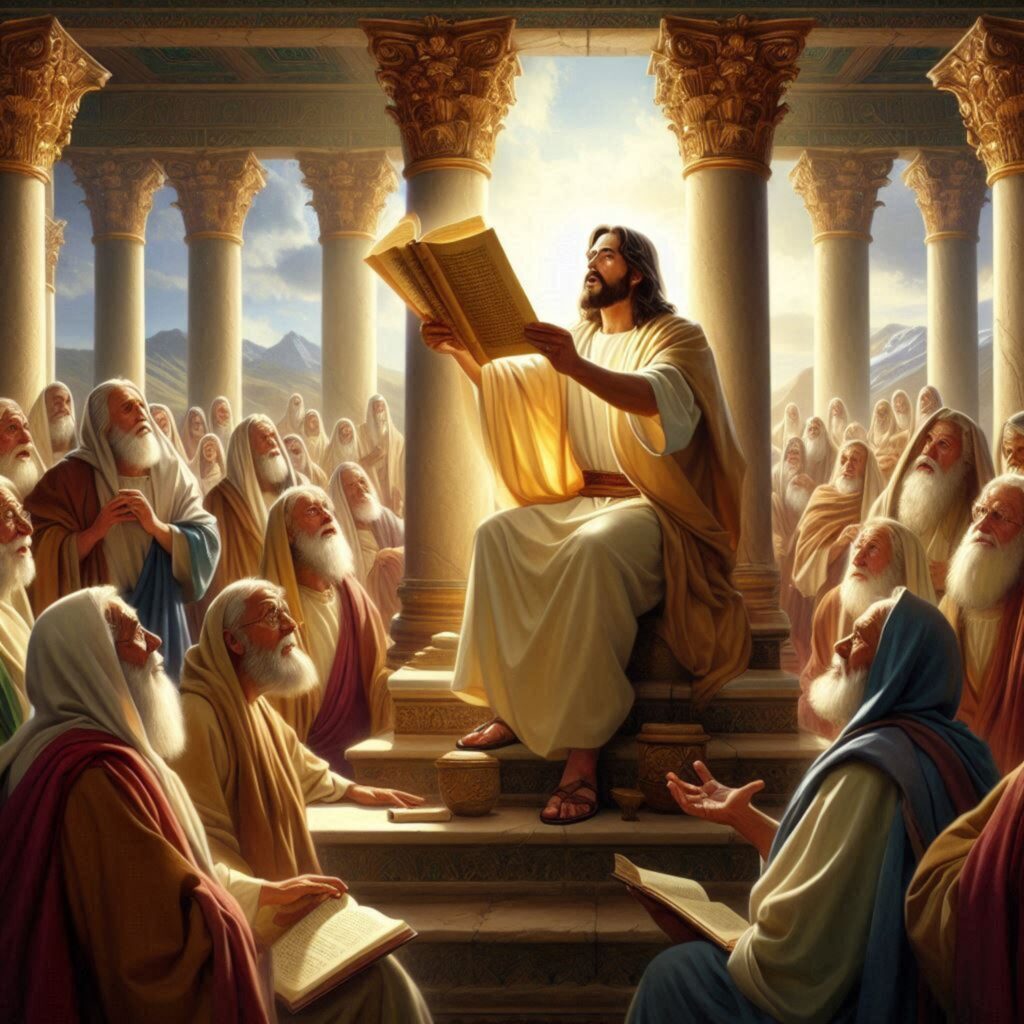
When JesusJesus of Nazareth, also called the Christ or the Messiah, is the central figure of the New Testament and the fulfillment of God’s redemptive plan. Born in the line of David, He taught with divine authority, performed miracles, and revealed the kingdom of God. More permanently silenced the SadduceesThe Sadducees were a wealthy, aristocratic Jewish sect during the Second Temple period, known for rejecting the resurrection, denying angels and spirits, and limiting their authority to the written Torah. Their confrontations with Jesus reveal theological blindness rooted in a restricted canon. More regarding the resurrectionResurrection is God’s act of raising the dead to new life — first seen in Christ’s victory over the grave, and ultimately fulfilled when all humanity is raised for judgment, transformation, and eternal destiny. More, the PhariseesThe Pharisees were a prominent Jewish religious sect during the Second Temple period, known for their strict adherence to oral tradition, legal precision, and public displays of righteousness. They frequently clashed with Jesus, whose teachings exposed their hypocrisy, spiritual blindness, and misuse of Scripture. More regrouped. They sent an expert in the law (a scribe) to test Him with a final, highly complex theological snare: “Master, which is the great commandment in the law?” (, KJV).
To understand the sheer magnitude of this question—and the structural, systemic brilliance of Christ’s answer—we must analyze this through the lens of network architecture. The PhariseesThe Pharisees were a prominent Jewish religious sect during the Second Temple period, known for their strict adherence to oral tradition, legal precision, and public displays of righteousness. They frequently clashed with Jesus, whose teachings exposed their hypocrisy, spiritual blindness, and misuse of Scripture. More were asking JesusJesus of Nazareth, also called the Christ or the Messiah, is the central figure of the New Testament and the fulfillment of God’s redemptive plan. Born in the line of David, He taught with divine authority, performed miracles, and revealed the kingdom of God. More to identify the “root directory” of the entire biblical scripture (operating system).
Here is the frame-by-frame diagnostic of the mysteries hidden within the Greatest CommandmentThe Greatest Commandment is Jesus’ authoritative summary of the entire Torah and Prophets. It begins with the Shema — “The LORD our God, the LORD is one” — and commands total love for God with heart, soul, mind, and strength, followed by love for neighbor. Jesus reveals this twofold command as the load‑bearing pillar upon which all Scripture structurally “hangs.” More.
1. The Setup: The “613 Code”
Why was this such a massive test for a 1st-century rabbi?
By the time of JesusJesus of Nazareth, also called the Christ or the Messiah, is the central figure of the New Testament and the fulfillment of God’s redemptive plan. Born in the line of David, He taught with divine authority, performed miracles, and revealed the kingdom of God. More, the PhariseesThe Pharisees were a prominent Jewish religious sect during the Second Temple period, known for their strict adherence to oral tradition, legal precision, and public displays of righteousness. They frequently clashed with Jesus, whose teachings exposed their hypocrisy, spiritual blindness, and misuse of Scripture. More had systematically extracted and codified exactly 613 Mitzvot (commandments) from the TorahTorah refers to the first five books of the Bible — Genesis, Exodus, Leviticus, Numbers, and Deuteronomy. It contains God’s foundational revelation to Israel: creation, covenant, law, worship, and identity. In Scripture, the Torah is the bedrock of all later revelation and the source Jesus cites when teaching the Greatest Commandment. More (Genesis through Deuteronomy).
They didn’t just pick a random number. Their rabbinic system mapped these laws directly to astronomyAstronomy is the study of the heavens — the sun, moon, stars, planets, and cosmic structures. In Scripture, astronomy is not merely a scientific discipline but a theological witness: the heavens declare God’s glory, reveal His order, mark His appointed times, and serve as signs within His created framework. More and human biology:
-
365 Negative Commands: (“Thou shalt not…”) This mathematically mirrors the exact number of days in the solar year, tying directly into the solar calendar protocol documented by EnochEnoch is the pre‑Flood patriarch who “walked with God” and was taken without seeing death. In biblical theology, he becomes the earliest prophetic witness to the rebellion of the Watchers, the coming judgment, and the structure of the unseen realm. More and JubileesJubilees is an ancient Jewish religious work, sometimes called The Little Genesis, that retells the events of Genesis and part of Exodus while emphasizing divine chronology, covenant faithfulness, angelic involvement, and obedience to God's laws. Though not included in most biblical canons, Jubilees preserves important historical traditions that provide insight into Second Temple Jewish beliefs and biblical interpretation. More.
-
248 Positive Commands: (“Thou shalt…”) According to ancient Jewish medical anatomy, this was the exact number of bones and primary organs in the human body.
The PhariseesThe Pharisees were a prominent Jewish religious sect during the Second Temple period, known for their strict adherence to oral tradition, legal precision, and public displays of righteousness. They frequently clashed with Jesus, whose teachings exposed their hypocrisy, spiritual blindness, and misuse of Scripture. More had built a massive, highly complex, interconnected “behavioral network”. They were testing JesusJesus of Nazareth, also called the Christ or the Messiah, is the central figure of the New Testament and the fulfillment of God’s redemptive plan. Born in the line of David, He taught with divine authority, performed miracles, and revealed the kingdom of God. More to see if He would arbitrarily elevate one localized rule over another, which would allow them to accuse Him of diminishing the rest of Moses’s law.
Instead, JesusJesus of Nazareth, also called the Christ or the Messiah, is the central figure of the New Testament and the fulfillment of God’s redemptive plan. Born in the line of David, He taught with divine authority, performed miracles, and revealed the kingdom of God. More bypasses the bloated Talmudic system entirely and goes straight to the core source scripture.
2. The First Mystery: The Echad (Composite Unity)
In (NIV), JesusJesus of Nazareth, also called the Christ or the Messiah, is the central figure of the New Testament and the fulfillment of God’s redemptive plan. Born in the line of David, He taught with divine authority, performed miracles, and revealed the kingdom of God. More begins His answer by quoting the most famous verse in the entire scriptural database, known as The Shema (from ):
“The most important one,” answered JesusJesus of Nazareth, also called the Christ or the Messiah, is the central figure of the New Testament and the fulfillment of God’s redemptive plan. Born in the line of David, He taught with divine authority, performed miracles, and revealed the kingdom of God. More, “is this: ‘Hear, O IsraelIsrael is the covenant people chosen by Yahweh, descended from Jacob, set apart to bear God’s name, receive His promises, and reveal His character to the nations. More: The Lord our God, the Lord is one.’”
For thousands of years, orthodox JudaismJudaism is the faith, identity, and covenant life of the people of Israel, rooted in the Torah and centered on worship of the one true God. It encompasses Israel’s history, law, temple worship, prophets, traditions, and the hope of God’s promised Messiah. More has recited this daily. But there is a massive linguistic anomaly hidden in the HebrewHebrew is the ancient language of the people of Israel and the primary language in which most of the Old Testament was originally written. As a member of the Northwest Semitic language family, Hebrew contains rich layers of meaning that provide deeper insight into Scripture, biblical names, prophecy, covenant theology, and God's revelation to His people. More word for “one“.
The HebrewHebrew is the ancient language of the people of Israel and the primary language in which most of the Old Testament was originally written. As a member of the Northwest Semitic language family, Hebrew contains rich layers of meaning that provide deeper insight into Scripture, biblical names, prophecy, covenant theology, and God's revelation to His people. More word used here is Echad (אֶחָד).
Echad does not mean an absolute, singular, indivisible entity. The HebrewHebrew is the ancient language of the people of Israel and the primary language in which most of the Old Testament was originally written. As a member of the Northwest Semitic language family, Hebrew contains rich layers of meaning that provide deeper insight into Scripture, biblical names, prophecy, covenant theology, and God's revelation to His people. More word for a strict, solitary singularity is Yachid.
Echad means a composite unity—multiple parts functioning seamlessly as one unified system.
-
In , a husband and wife become “one [echad] flesh.” (Two distinct people, one union).
-
In , the spies cut down “one [echad] cluster of grapes.” (Many distinct grapes, one cluster).
By anchoring the Greatest CommandmentThe Greatest Commandment is Jesus’ authoritative summary of the entire Torah and Prophets. It begins with the Shema — “The LORD our God, the LORD is one” — and commands total love for God with heart, soul, mind, and strength, followed by love for neighbor. Jesus reveals this twofold command as the load‑bearing pillar upon which all Scripture structurally “hangs.” More on the word Echad, JesusJesus of Nazareth, also called the Christ or the Messiah, is the central figure of the New Testament and the fulfillment of God’s redemptive plan. Born in the line of David, He taught with divine authority, performed miracles, and revealed the kingdom of God. More is legally and grammatically validating the Triune nature of the Creator. Using the number 3 (Triune), the very first commandment demands that we recognize the one true God as a composite, unified being (Father, Son, and Holy Spirit functioning as One).
3. The Second Mystery: The Biological/Anatomical Hardware
JesusJesus of Nazareth, also called the Christ or the Messiah, is the central figure of the New Testament and the fulfillment of God’s redemptive plan. Born in the line of David, He taught with divine authority, performed miracles, and revealed the kingdom of God. More continues in (KJV):
“And thou shalt love the Lord thy God with all thy heart, and with all thy soul, and with all thy mind, and with all thy strength: this is the first commandment.”
JesusJesus of Nazareth, also called the Christ or the Messiah, is the central figure of the New Testament and the fulfillment of God’s redemptive plan. Born in the line of David, He taught with divine authority, performed miracles, and revealed the kingdom of God. More does not ask for a vague emotional feeling. He demands a total systems override, engaging every single component of the human hardware. Look at how this maps perfectly to the tripartite TabernacleThe Tabernacle was the portable sanctuary built by the Israelites in the wilderness according to God's instructions to Moses. It served as the dwelling place of God's presence among His people and was the center of worship, sacrifice, and priestly ministry before the construction of the Temple in Jerusalem. The Tabernacle reveals important truths concerning holiness, atonement, covenant fellowship, and... More structure audited:
-
Heart (Kardia): The central pumping station and the seat of the human will.
-
Soul (Psyche): The animating life force, your unique identity, and emotions (The Holy Place / OrganellesOrganelles are specialized structures within a cell that perform distinct functions necessary for life — energy production, information storage, waste removal, communication, and structural integrity. In biblical analogy, organelles mirror the ordered design of creation and the way God structures life with purpose and function. More).
-
Mind (Dianoia): The logical, intellectual processor. The center of critical thought and deep analytical reasoning (the very tool a Berean uses).
-
Strength (Ischus): The physical, kinetic energy output. The literal bodily capacity (The Outer Court / Cytoplasm).
The PhariseesThe Pharisees were a prominent Jewish religious sect during the Second Temple period, known for their strict adherence to oral tradition, legal precision, and public displays of righteousness. They frequently clashed with Jesus, whose teachings exposed their hypocrisy, spiritual blindness, and misuse of Scripture. More were wearing physical leather boxes called TefillinTefillin are small black leather boxes containing handwritten Torah passages, worn by observant Jews during weekday prayer. They are bound to the arm and forehead as a physical fulfillment of the command in Deuteronomy 6 to “bind” God’s words on the hand and “as frontlets between the eyes.” More (phylacteries) strapped to their heads and arms, containing the text of the Shema, trying to fulfill this command externally.
JesusJesus of Nazareth, also called the Christ or the Messiah, is the central figure of the New Testament and the fulfillment of God’s redemptive plan. Born in the line of David, He taught with divine authority, performed miracles, and revealed the kingdom of God. More corrects the hardware error. You cannot achieve this by strapping a leather box to your forehead. The command requires the total, synchronized devotion of the entire human biological and spiritual network.
4. The Third Mystery: The Physics of “Hanging”
After adding the second commandment ( – “Love thy neighbour as thyself”), JesusJesus of Nazareth, also called the Christ or the Messiah, is the central figure of the New Testament and the fulfillment of God’s redemptive plan. Born in the line of David, He taught with divine authority, performed miracles, and revealed the kingdom of God. More issues a staggering statement of structural physics.
(KJV):
“On these two commandments hang all the law and the prophetsProphets were God’s chosen messengers who spoke His word to Israel, calling the people to repentance, revealing God’s will, and announcing future events. In Scripture, “the Prophets” also refers to the second major division of the Hebrew Bible, which expands and applies the Torah’s covenant truths. More.”
The Greek word for “hang” is Kremannymi (κρεμάννυμι).
This is a structural engineering term. It means to suspend, to hinge, or to secure to a central pillar.
If you view the biblical database through the lens of systems architecture—organizing the data into structured boxes and connecting circles to optimize the network—you will instantly recognize what JesusJesus of Nazareth, also called the Christ or the Messiah, is the central figure of the New Testament and the fulfillment of God’s redemptive plan. Born in the line of David, He taught with divine authority, performed miracles, and revealed the kingdom of God. More just did.
He didn’t just give them a “nice rule.” He handed them the central, load-bearing pillar of the universe.
Every single one of the 613 laws, every prophecy, every timeline, and every command is mathematically and structurally suspended from this single, central hub. If you remove Agape (the unconditional, self-sacrificial love of God), the entire suspension bridge of the biblical network collapses. You can follow every other rule perfectly, but if disconnected from the root directory of the Shema, the system crashes.
Study & Memory Tool: L.A.W.S.
To easily quote and explain the profound structural mysteries of the Greatest CommandmentThe Greatest Commandment is Jesus’ authoritative summary of the entire Torah and Prophets. It begins with the Shema — “The LORD our God, the LORD is one” — and commands total love for God with heart, soul, mind, and strength, followed by love for neighbor. Jesus reveals this twofold command as the load‑bearing pillar upon which all Scripture structurally “hangs.” More to someone else, use the acronym L.A.W.S.
-
L – Load-Bearing Hub (Kremannymi): . The entire network of the TorahTorah refers to the first five books of the Bible — Genesis, Exodus, Leviticus, Numbers, and Deuteronomy. It contains God’s foundational revelation to Israel: creation, covenant, law, worship, and identity. In Scripture, the Torah is the bedrock of all later revelation and the source Jesus cites when teaching the Greatest Commandment. More and ProphetsProphets were God’s chosen messengers who spoke His word to Israel, calling the people to repentance, revealing God’s will, and announcing future events. In Scripture, “the Prophets” also refers to the second major division of the Hebrew Bible, which expands and applies the Torah’s covenant truths. More structurally “hangs” on this single twofold command.
-
A – Anatomical Engagement: . It requires the total synchronization of the Heart (will), Soul (identity), Mind (intellect), and Strength (kinetic output).
-
W – Without Bloat (Bypassing 613): JesusJesus of Nazareth, also called the Christ or the Messiah, is the central figure of the New Testament and the fulfillment of God’s redemptive plan. Born in the line of David, He taught with divine authority, performed miracles, and revealed the kingdom of God. More bypassed the 613 micro-laws created by the PhariseesThe Pharisees were a prominent Jewish religious sect during the Second Temple period, known for their strict adherence to oral tradition, legal precision, and public displays of righteousness. They frequently clashed with Jesus, whose teachings exposed their hypocrisy, spiritual blindness, and misuse of Scripture. More (365 negative/248 positive) by pointing directly to the source code.
-
S – Shema’s Echad: . The foundational truth that God is a composite unity (Echad), completely validating the Triune nature of the Creator.
By applying the Berean diagnostic, we see that JesusJesus of Nazareth, also called the Christ or the Messiah, is the central figure of the New Testament and the fulfillment of God’s redemptive plan. Born in the line of David, He taught with divine authority, performed miracles, and revealed the kingdom of God. More didn’t just quote a Sunday-school memory verse. He mapped human anatomy, defined the Triune nature of God, and revealed the structural physics that holds the entire biblical system together.


