(KJV) “Now the Bereans were more noble-minded than the Thessalonians, for they received the message with great eagerness and examined the Scriptures every day to see if these teachings were true.”
Tradition Vs Truth
The selected two events that must be studied together because they represent the ultimate contrast in human behavior. On one side, we have Thessalonica: the institutional, emotional, mob-mentality response to new information. On the other side, we have Berea: the forensic, objective, text-driven pursuit of truth.
Because we are operating under the Berean standard, it is vital to audit exactly what that standard is, and how archaeology physically proves the exact historical setting of these two cities. Let us run the diagnostic.
1. The Uproar in Thessalonica (The Emotional Mob)
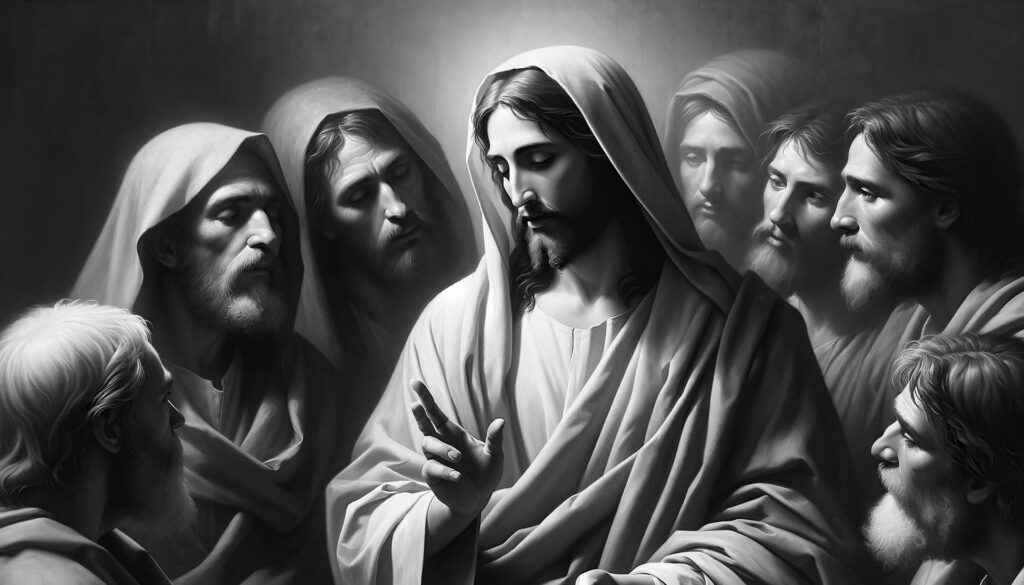
In , the Apostle PaulAlso known as the Apostle Paul or Saul of Tarsus, he is the most influential missionary and writer of the New Testament. Originally a Pharisee who persecuted Christians, Paul experienced a dramatic encounter with the risen Jesus and became a devoted messenger of the gospel. He traveled widely, planted churches across the Roman world, and wrote letters that form a... More arrives in the bustling port city of Thessalonica. He does not preach a new religion; he goes directly to the synagogue and executes a logical, scriptural argument.
(KJV): “And PaulAlso known as the Apostle Paul or Saul of Tarsus, he is the most influential missionary and writer of the New Testament. Originally a Pharisee who persecuted Christians, Paul experienced a dramatic encounter with the risen Jesus and became a devoted messenger of the gospel. He traveled widely, planted churches across the Roman world, and wrote letters that form a... More, as his manner was, went in unto them, and three sabbath days reasoned with them out of the scriptures, Opening and alleging, that Christ must needs have suffered, and risen again from the dead…”
PaulAlso known as the Apostle Paul or Saul of Tarsus, he is the most influential missionary and writer of the New Testament. Originally a Pharisee who persecuted Christians, Paul experienced a dramatic encounter with the risen Jesus and became a devoted messenger of the gospel. He traveled widely, planted churches across the Roman world, and wrote letters that form a... More used the literal texts—the prophecies of and —to prove the biology and the necessity of the Messiah’s death and resurrection. While some Jews and many GreeksThe people of ancient Greece, known for their influential civilization, philosophy, literature, and city‑states such as Athens and Sparta. In Scripture’s cosmic‑geography worldview, the Greeks represent one of the 70 nations scattered from Babel and placed under the authority of a territorial elohim (a “Son of God”) rather than under YHVH’s direct rule. Their pantheon—Zeus, Apollo, Athena, and others—reflects the... More believed the evidence, the religious institution reacted with violent jealousy.
(NIV): “But other Jews were jealous; so they rounded up some bad characters from the marketplace, formed a mob and started a riot in the city.”
When people cannot defeat an argument using the text, they resort to volume, emotion, and violence. They dragged a believer named Jason before the city officials, screaming that PaulAlso known as the Apostle Paul or Saul of Tarsus, he is the most influential missionary and writer of the New Testament. Originally a Pharisee who persecuted Christians, Paul experienced a dramatic encounter with the risen Jesus and became a devoted messenger of the gospel. He traveled widely, planted churches across the Roman world, and wrote letters that form a... More and his companions had “turned the world upside down“ ().
2. The Archaeological Proof: The “Politarch” Inscription
For over a century, secular academics and biblical critics used the uproar in Thessalonica to claim the Book of Acts was historically inaccurate.
In , the physician LukeA Gentile physician, missionary companion of Paul, and the inspired author of both the Gospel of Luke and the Book of Acts. Luke is known for his careful historical detail, medical precision, and emphasis on Jesus’ compassion toward the marginalized — including women, the poor, Gentiles, and the outcast. His writings form a two‑volume work documenting: • the life, ministry,... More (the author of Acts) calls the city officials of Thessalonica “rulers of the city”. The specific Greek word LukeA Gentile physician, missionary companion of Paul, and the inspired author of both the Gospel of Luke and the Book of Acts. Luke is known for his careful historical detail, medical precision, and emphasis on Jesus’ compassion toward the marginalized — including women, the poor, Gentiles, and the outcast. His writings form a two‑volume work documenting: • the life, ministry,... More wrote in the manuscript was Politarchs (politarchas).
The critics pointed out that the word Politarch did not exist anywhere in classical Greek literature. They argued that LukeA Gentile physician, missionary companion of Paul, and the inspired author of both the Gospel of Luke and the Book of Acts. Luke is known for his careful historical detail, medical precision, and emphasis on Jesus’ compassion toward the marginalized — including women, the poor, Gentiles, and the outcast. His writings form a two‑volume work documenting: • the life, ministry,... More made the word up, proving the Bible was a fabrication written centuries later by someone who didn’t know Greek history.
In 1835, an ancient Roman arch spanning the main street of Thessalonica (the Vardar Gate) was being demolished. A massive stone slab from the arch was recovered and sent to the British Museum. Carved directly into the physical stone was an inscription dating precisely to the 1st century.
The inscription begins: “In the time of the Politarchs…”
Since that discovery, archaeologists have found more than 30 physical inscriptions in the Macedonian region using this exact, highly localized political title. The critics were silenced by the stones. LukeA Gentile physician, missionary companion of Paul, and the inspired author of both the Gospel of Luke and the Book of Acts. Luke is known for his careful historical detail, medical precision, and emphasis on Jesus’ compassion toward the marginalized — including women, the poor, Gentiles, and the outcast. His writings form a two‑volume work documenting: • the life, ministry,... More did not make a mistake; his historical and political accuracy was so flawless that he recorded a local title that the rest of the ancient world had forgotten.
3. The Flight to Berea: The Contrast in Character
Because of the physical danger of the riot, the believers sent PaulAlso known as the Apostle Paul or Saul of Tarsus, he is the most influential missionary and writer of the New Testament. Originally a Pharisee who persecuted Christians, Paul experienced a dramatic encounter with the risen Jesus and became a devoted messenger of the gospel. He traveled widely, planted churches across the Roman world, and wrote letters that form a... More and Silas away under the cover of darkness to a smaller, quieter city called Berea (modern-day Veria in Greece).
Here, the Master Architect gives us the ultimate operational standard for any person seeking the truth.
(KJV): “These were more noble than those in Thessalonica, in that they received the word with all readiness of mind, and searched the scriptures daily, whether those things were so.”
Let us break down the exact operational mechanics of the Berean character:
-
Readiness of Mind (Prothymia): They did not cross their arms in hostile skepticism, nor did they bring their fragile egos to the table. They possessed an intense, eager, and open willingness to listen to the data.
-
Searched the Scriptures (Anakrino): This is a forensic, legal word. It means to sift up and down, to cross-examine, to investigate strictly and carefully. They did not just take Paul’s word for it—even though PaulAlso known as the Apostle Paul or Saul of Tarsus, he is the most influential missionary and writer of the New Testament. Originally a Pharisee who persecuted Christians, Paul experienced a dramatic encounter with the risen Jesus and became a devoted messenger of the gospel. He traveled widely, planted churches across the Roman world, and wrote letters that form a... More was an Apostle performing miracles. They cross-examined the Apostle against the physical scrolls.
-
Daily Verification: They didn’t listen to one sermon on the Sabbath and go home. They executed a daily, relentless audit of the text to ensure the new information perfectly mapped to the established database.
4. The Canonical Context: What Were They Searching?
When the text says the Bereans “searched the scriptures,” what physical scrolls were they unrolling?
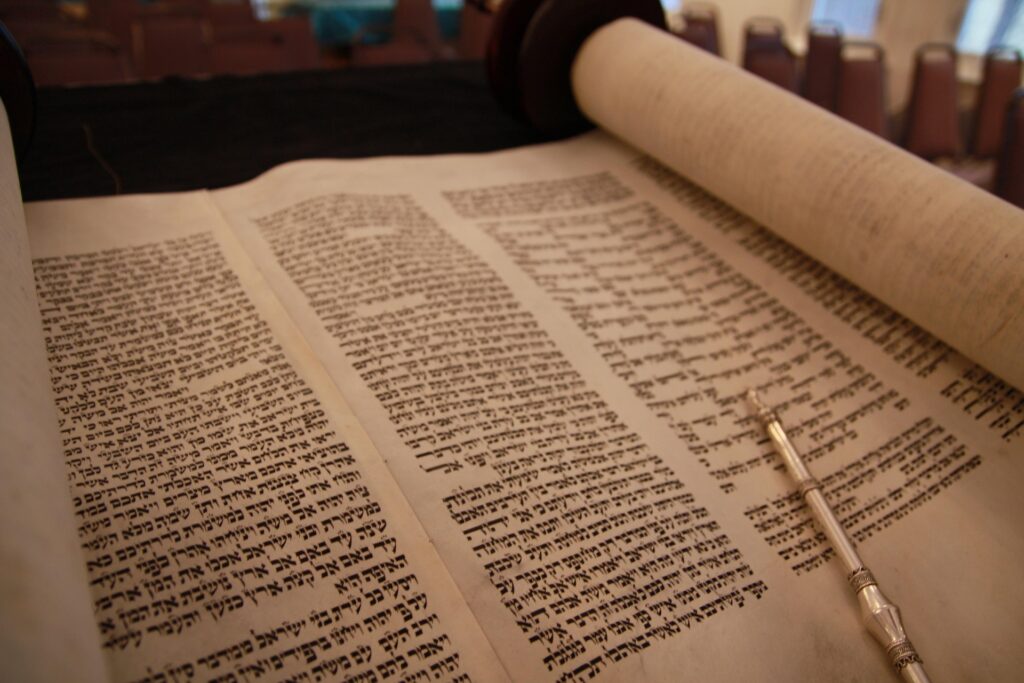
The New TestamentThe collection of 27 inspired books that record the fulfillment of God’s redemptive plan through Jesus Christ and the birth of the Church. The New Testament includes the Gospels, Acts, Epistles, and Revelation, forming the doctrinal foundation of Christian faith. In the context of your page, the New Testament provides the precise Greek vocabulary and legal framework needed to understand... More had not been written yet. They were searching the Greek SeptuagintThe ancient Greek translation of the Hebrew Scriptures, produced between the 3rd–1st centuries BC for Jews living in the Greek‑speaking world. Often abbreviated LXX, it is the earliest complete witness to the Old Testament and includes books not preserved in the later Masoretic tradition. The Septuagint was widely used in the time of Jesus and the apostles, and many New... More (the Old TestamentThe first major division of the Christian Bible, consisting of 39 books in the standard Protestant canon (and more in expanded canons such as the Ethiopian tradition). The Old Testament records God’s creation, covenants, laws, prophets, and the entire pre‑Messianic history of Israel. In the context of your page, the Old Testament provides the physics and architecture of the afterlife... More translated into Greek in Alexandria roughly 200 years prior). This collection contained the Torah, the Prophets, the Psalms, and crucially, the books of the Apocrypha and the extended historical canon (such as the writings of EnochA pre‑Flood patriarch and one of the most significant figures in early biblical and extra‑biblical literature. In Scripture, Enoch is known for walking with God and being taken without seeing death (Genesis 5). But in theological studies — especially those involving the underworld architecture and the Watchers — “Enoch” refers primarily to the writings attributed to him in the Ethiopian... More, which the Apostles referenced heavily).
The Bereans were taking the ancient prophecies (like the timeline of , the virgin birth of , and the suffering servant of ) and mathematically calculating whether the biological life and death of JesusJesus of Nazareth, also called the Christ or the Messiah, is the central figure of the New Testament and the fulfillment of God’s redemptive plan. Born in the line of David, He taught with divine authority, performed miracles, and revealed the kingdom of God. Through His crucifixion and resurrection, Jesus provides atonement, salvation, and restored relationship with God. He is... More of Nazareth fulfilled the physical requirements of the text.
Because the evidence matched, (NIV) records the logical result: “As a result, many of them believed...” Belief for a Berean is not blind faithTrust in God’s character, promises, and guidance — choosing confidence in Him even when circumstances are uncertain. More; it is the logical conclusion of verified evidence.
Study Method & Memory Tool: N.O.B.L.E.
To permanently lock the contrast between the Thessalonian mob and the Berean character into your memory—and to remember the archaeological proof that backs the text—use the acronym N.O.B.L.E.
-
N – No Mob Emotion: Unlike Thessalonica, the Bereans did not react with jealousy or physical violence when their religious traditions were challenged.
-
O – Openness of Mind: They received the word with “all readiness,” allowing the text to speak without imposing their own preconceived bias.
-
B – Bypassed Human Authority: They did not blindly trust PaulAlso known as the Apostle Paul or Saul of Tarsus, he is the most influential missionary and writer of the New Testament. Originally a Pharisee who persecuted Christians, Paul experienced a dramatic encounter with the risen Jesus and became a devoted messenger of the gospel. He traveled widely, planted churches across the Roman world, and wrote letters that form a... More just because he was a dynamic speaker; they demanded the scriptural proof.
-
L – Local Archaeology (The Politarch): The literal Vardar Gate stone proves the absolute historical precision of the cities and political titles LukeA Gentile physician, missionary companion of Paul, and the inspired author of both the Gospel of Luke and the Book of Acts. Luke is known for his careful historical detail, medical precision, and emphasis on Jesus’ compassion toward the marginalized — including women, the poor, Gentiles, and the outcast. His writings form a two‑volume work documenting: • the life, ministry,... More documented.
-
E – Examined Daily: Anakrino. They executed a rigorous, daily forensic cross-examination of the ancient scrolls to verify the truth.
The Lord God placed these two cities side-by-side in the text to force us to make a choice. We can either be the mob that screams when our institutional traditions are challenged, or we can be the Bereans who quietly open the scrolls, check the dirt, and let the physical text dictate the infinite truth.