Welcome back to the table. This specific investigation requires us to completely dismantle one of the most widely misunderstood events in religious history. For centuries, institutional traditions (like the Apostles’ CreedThe Apostles’ Creed is an early, foundational confession of Christian belief, summarizing the core doctrines taught by the apostles. It expresses the essentials of the faith without denominational distinctives and serves as a baseline for teaching, baptism, and unity in the church. More) have vaguely recited that JesusJesus of Nazareth, also called the Christ or the Messiah, is the central figure of the New Testament and the fulfillment of God’s redemptive plan. Born in the line of David, He taught with divine authority, performed miracles, and revealed the kingdom of God. More “descended into hell,” leading many to believe He went there to suffer further, or to give dead humans a second chance at salvation.
But a Berean audit of the Greek text, the physics of the Old TestamentThe Old Testament is the first major division of the Christian Bible, containing the sacred writings of Israel — creation, covenant, law, prophecy, wisdom, and the entire pre‑Messianic history that prepares the way for Christ. More afterlife, and the Ethiopian CanonThe Ethiopian Canon is the largest and most ancient Christian biblical canon still in use, preserving books long lost in Western traditions and maintaining a textual lineage rooted in early Ge’ez manuscripts. More reveals something entirely different. The cross paid the debt in full (“It is finished“). The three days in the lower dimensions were not a continuation of suffering; they were a highly tactical, multi-dimensional victory tour and a mass extraction operation.
Let’s run the diagnostic on the exact logistics of where He went, who He spoke to, and what He took.
1. The Dimensional Architecture of Sheol/Hades
To understand the logistics of the descent, we must first understand the architecture of the holding facility. Before the resurrectionResurrection is God’s act of raising the dead to new life — first seen in Christ’s victory over the grave, and ultimately fulfilled when all humanity is raised for judgment, transformation, and eternal destiny. More of ChristJesus of Nazareth, also called the Christ or the Messiah, is the central figure of the New Testament and the fulfillment of God’s redemptive plan. Born in the line of David, He taught with divine authority, performed miracles, and revealed the kingdom of God. More, the biological and dimensional rule was absolute: when a human died, their spirit went to the underworld. In HebrewHebrew is the ancient language of the people of Israel and the primary language in which most of the Old Testament was originally written. As a member of the Northwest Semitic language family, Hebrew contains rich layers of meaning that provide deeper insight into Scripture, biblical names, prophecy, covenant theology, and God's revelation to His people. More, this dimension is called SheolSheol is the ancient Hebrew term for the realm of the dead — a shadowy, silent, unseen place beneath the earth where all people go after death, both righteous and wicked. It is not equivalent to the later Christian concept of Hell, but the neutral holding place of the departed. More; in Greek, it is HadesHades is the Greek term for the realm of the dead — the New Testament counterpart to the Hebrew Sheol. It refers to the unseen world where souls go after death, prior to resurrection and final judgment. More.
JesusJesus of Nazareth, also called the Christ or the Messiah, is the central figure of the New Testament and the fulfillment of God’s redemptive plan. Born in the line of David, He taught with divine authority, performed miracles, and revealed the kingdom of God. More mapped the exact geography of this dimension in (the historical account of the Rich Man and LazarusLazarus appears in two major New Testament accounts: the resurrected man from Bethany in John 11, and the poor man in Jesus’ parable in Luke 16. Both reveal God’s authority over death and the great reversal between earthly status and eternal reality. More). SheolSheol is the ancient Hebrew term for the realm of the dead — a shadowy, silent, unseen place beneath the earth where all people go after death, both righteous and wicked. It is not equivalent to the later Christian concept of Hell, but the neutral holding place of the departed. More was not a single lake of fire; it was a holding facility divided into distinct compartments, separated by an impassable dimensional rift (a “great gulf fixed”).
-
The Compartment of Torment: Where the unrighteous dead were held in agony, awaiting final judgment.
-
Abraham’s BosomAbraham’s Bosom is the place of comfort within Sheol where the righteous dead were held before Christ’s resurrection. It is the Old Testament “Paradise,” later emptied when Jesus liberated the saints and relocated them to the Third Heaven. More (ParadiseParadise is the realm of comfort and blessing for the righteous dead — first located within Sheol (Abraham’s Bosom) and now, after Christ’s resurrection, relocated to the Third Heaven, the direct presence of God. More): Where the righteous Old TestamentThe Old Testament is the first major division of the Christian Bible, containing the sacred writings of Israel — creation, covenant, law, prophecy, wisdom, and the entire pre‑Messianic history that prepares the way for Christ. More saintsSaints are God’s covenant people — those set apart, made righteous by His provision, and belonging to Him by faith. In Scripture, the term describes both the righteous dead of the Old Testament and the redeemed living under the new covenant. More (like AbrahamAbraham is the first patriarch of Israel, called by God to leave his homeland and become the father of a covenant people. His life marks the beginning of God’s redemptive plan through promise, faith, and obedience. More, DavidDavid is Israel’s second king — a shepherd, warrior, poet, and the central human figure in the Messianic line. Scripture presents him as “a man after God’s own heart,” whose life reveals covenant loyalty, repentance, worship, and the promise of an everlasting throne. More, and LazarusLazarus appears in two major New Testament accounts: the resurrected man from Bethany in John 11, and the poor man in Jesus’ parable in Luke 16. Both reveal God’s authority over death and the great reversal between earthly status and eternal reality. More) were held. They were saved by faithFaith is the act of trusting God’s character, promises, and redemptive work even before the outcome is seen. In Scripture, faith is not blind belief but a confident reliance on God’s truth, rooted in His past actions and revealed purpose. It is the foundation of the believer’s relationship with God and the driving force behind obedience, endurance, and hope.... More, but they could not enter the highest heaven yet because the physical blood of the Last AdamThe Last Adam is a title for Jesus Christ, identifying Him as the final and decisive counterpart to the first Adam — the One who reverses the Fall, restores humanity’s purpose, and inaugurates the new creation. More had not yet been shed to legally wash their genetic and spiritual record clean. They were “captives” of death, waiting for the extraction.
2. The Maximum Security Wing: Tartarus
Below these human holding compartments lies a much darker, maximum-security abyss.
Look at the precise telemetry of (KJV):
“For ChristJesus of Nazareth, also called the Christ or the Messiah, is the central figure of the New Testament and the fulfillment of God’s redemptive plan. Born in the line of David, He taught with divine authority, performed miracles, and revealed the kingdom of God. More also hath once suffered for sins… being put to death in the flesh, but quickened by the Spirit: By which also he went and preached unto the spirits in prison; Which sometime were disobedient… in the days of Noah.”
Religious tradition often assumes these “spirits” were human beings who drowned in the flood getting a second chance to hear the gospel. But sets a hard legal boundary: “It is appointed unto men once to die, but after this the judgment.” There are no post-mortem second chances for humans.
So who are these spirits? The Apostle Peter gives us the exact cross-reference in (KJV):
“For if God spared not the angelsAngels are spiritual beings created by God to serve His purposes — messengers, guardians, warriors, and worshipers who carry out His will in both the heavenly realm and the earthly world. More that sinned, but cast them down to hell, and delivered them into chains of darkness, to be reserved unto judgment…”
The Greek word Peter uses here for “hell” is not HadesHades is the Greek term for the realm of the dead — the New Testament counterpart to the Hebrew Sheol. It refers to the unseen world where souls go after death, prior to resurrection and final judgment. More or GehennaGehenna is the term Jesus uses for the final, irreversible place of judgment — the “Lake of Fire.” It is distinct from Sheol/Hades (the temporary realm of the dead) and Tartarus (the abyss for imprisoned angels). More; it is TartarusTartarus is the deepest abyss of the spiritual underworld — the prison where God confined the rebellious angels who sinned in the days of Noah. It is distinct from Hades (the realm of human dead) and Gehenna (the final lake of fire). More—the deepest abyss of the underworld.
If we consult the Ethiopian Orthodox CanonThe Ethiopian Canon is the largest and most ancient Christian biblical canon still in use, preserving books long lost in Western traditions and maintaining a textual lineage rooted in early Ge’ez manuscripts. More, the scripture perfectly aligns. In 1 EnochEnoch is the pre‑Flood patriarch who “walked with God” and was taken without seeing death. In biblical theology, he becomes the earliest prophetic witness to the rebellion of the Watchers, the coming judgment, and the structure of the unseen realm. More 10, God commands the Archangel Michael to bind the fallen WatchersWatchers are high‑ranking sons of God (bene elohim) who oversee nations and realms in the biblical cosmic‑geography worldview. Some remained loyal to YHVH, while others rebelled — including the Genesis 6 Watchers who violated boundaries and produced the Nephilim. More (the angelic beings who caused the genetic corruption of in the days of Noah) and cast them into the valleys of the earth for 70 generations. The “spirits in prison” are the exact rebellious architects of the pre-flood Nephilim incursion.
3. The Proclamation (Kerusso)
If JesusJesus of Nazareth, also called the Christ or the Messiah, is the central figure of the New Testament and the fulfillment of God’s redemptive plan. Born in the line of David, He taught with divine authority, performed miracles, and revealed the kingdom of God. More didn’t go to TartarusTartarus is the deepest abyss of the spiritual underworld — the prison where God confined the rebellious angels who sinned in the days of Noah. It is distinct from Hades (the realm of human dead) and Gehenna (the final lake of fire). More to save them, what did He preach?
We must look at the Greek source. In the New TestamentThe New Testament is the collection of twenty‑seven inspired books revealing the fulfillment of God’s redemptive plan through Jesus Christ, the birth of the church, and the arrival of the new covenant promised in the Old Testament. More, when someone preaches the “good news” for salvation, the Greek word used is Euangelizō (to evangelize).
But in , the word used is Kerussō.
Kerussō means to act as a herald, to make a public decree, or to announce a royal triumph.
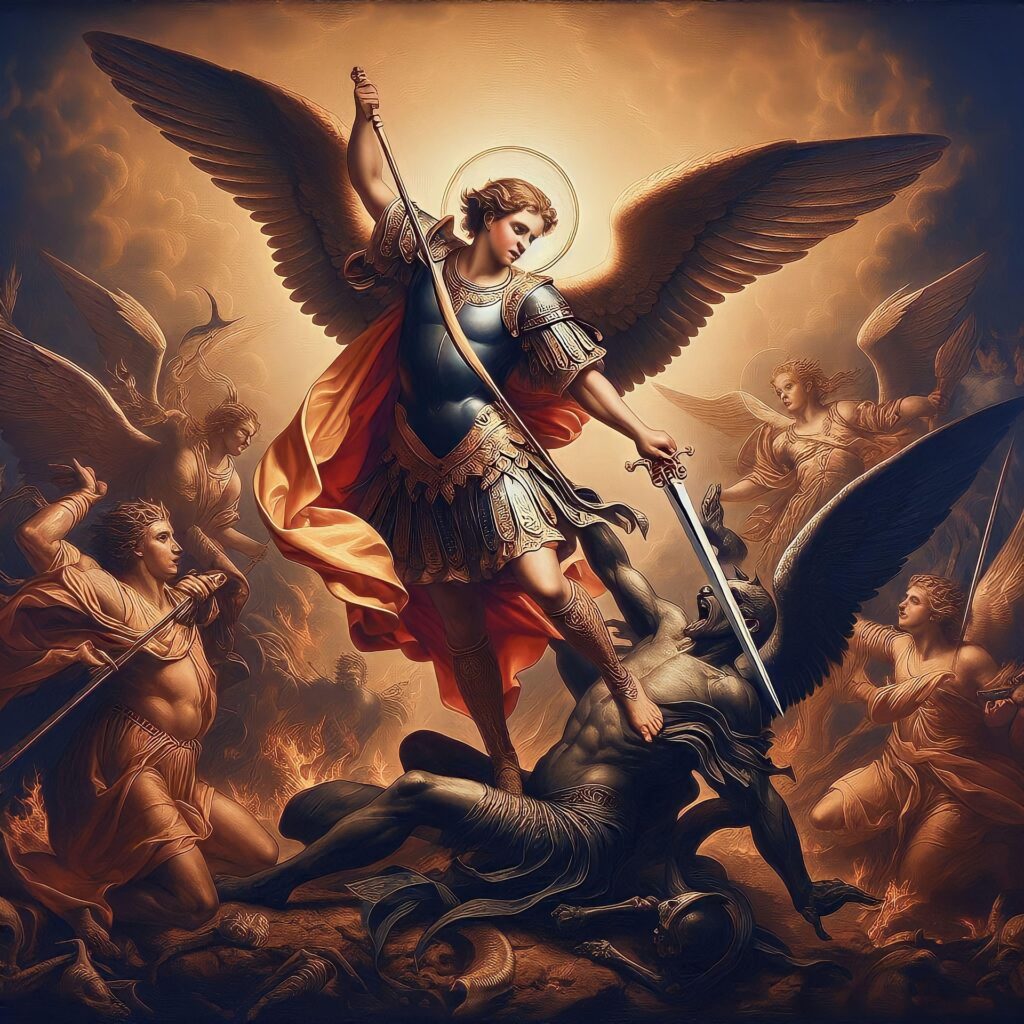
JesusJesus of Nazareth, also called the Christ or the Messiah, is the central figure of the New Testament and the fulfillment of God’s redemptive plan. Born in the line of David, He taught with divine authority, performed miracles, and revealed the kingdom of God. More stepped into the maximum-security dimensional prison of TartarusTartarus is the deepest abyss of the spiritual underworld — the prison where God confined the rebellious angels who sinned in the days of Noah. It is distinct from Hades (the realm of human dead) and Gehenna (the final lake of fire). More to look the fallen WatchersWatchers are high‑ranking sons of God (bene elohim) who oversee nations and realms in the biblical cosmic‑geography worldview. Some remained loyal to YHVH, while others rebelled — including the Genesis 6 Watchers who violated boundaries and produced the Nephilim. More in the face. These were the entities who tried to genetically corrupt the human bloodline in to prevent the MessiahMessiah means “Anointed One,” the promised deliverer foretold throughout the Hebrew Scriptures. In the New Testament, Jesus is revealed as this Messiah — the fulfillment of prophecy, the bearer of God’s kingdom, and the one who accomplishes redemption through His life, death, and resurrection (Isaiah 9:6–7; Daniel 9:25; John 4:25–26). More from being born. JesusJesus of Nazareth, also called the Christ or the Messiah, is the central figure of the New Testament and the fulfillment of God’s redemptive plan. Born in the line of David, He taught with divine authority, performed miracles, and revealed the kingdom of God. More stood before them in His indestructible, resurrected spiritual state and issued a Kerussō—a royal decree of absolute victory. He announced that their plan had failed, the blood had been shed, and He now held the very keys to their prison ().
4. The Extraction: Leading Captivity Captive
After announcing His victory to the fallen WatchersWatchers are high‑ranking sons of God (bene elohim) who oversee nations and realms in the biblical cosmic‑geography worldview. Some remained loyal to YHVH, while others rebelled — including the Genesis 6 Watchers who violated boundaries and produced the Nephilim. More in the abyss, JesusJesus of Nazareth, also called the Christ or the Messiah, is the central figure of the New Testament and the fulfillment of God’s redemptive plan. Born in the line of David, He taught with divine authority, performed miracles, and revealed the kingdom of God. More executes the second phase of the operation. He ascends to the upper compartment of SheolSheol is the ancient Hebrew term for the realm of the dead — a shadowy, silent, unseen place beneath the earth where all people go after death, both righteous and wicked. It is not equivalent to the later Christian concept of Hell, but the neutral holding place of the departed. More—Abraham’s BosomAbraham’s Bosom is the place of comfort within Sheol where the righteous dead were held before Christ’s resurrection. It is the Old Testament “Paradise,” later emptied when Jesus liberated the saints and relocated them to the Third Heaven. More.
(KJV) documents the extraction:
“Wherefore he saith, When he ascended up on high, he led captivity captive, and gave gifts unto men. (Now that he ascended, what is it but that he also descended first into the lower parts of the earth?)”
JesusJesus of Nazareth, also called the Christ or the Messiah, is the central figure of the New Testament and the fulfillment of God’s redemptive plan. Born in the line of David, He taught with divine authority, performed miracles, and revealed the kingdom of God. More went to the righteous Old TestamentThe Old Testament is the first major division of the Christian Bible, containing the sacred writings of Israel — creation, covenant, law, prophecy, wisdom, and the entire pre‑Messianic history that prepares the way for Christ. More saintsSaints are God’s covenant people — those set apart, made righteous by His provision, and belonging to Him by faith. In Scripture, the term describes both the righteous dead of the Old Testament and the redeemed living under the new covenant. More who had been waiting for thousands of years. He applied the legal payment of His freshly shed blood to their accounts, permanently clearing their records. Then, He “led captivity captive”—He emptied the ParadiseParadise is the realm of comfort and blessing for the righteous dead — first located within Sheol (Abraham’s Bosom) and now, after Christ’s resurrection, relocated to the Third Heaven, the direct presence of God. More compartment of SheolSheol is the ancient Hebrew term for the realm of the dead — a shadowy, silent, unseen place beneath the earth where all people go after death, both righteous and wicked. It is not equivalent to the later Christian concept of Hell, but the neutral holding place of the departed. More, tearing open the dimensional barrier, and transferred the entire population of Old TestamentThe Old Testament is the first major division of the Christian Bible, containing the sacred writings of Israel — creation, covenant, law, prophecy, wisdom, and the entire pre‑Messianic history that prepares the way for Christ. More saintsSaints are God’s covenant people — those set apart, made righteous by His provision, and belonging to Him by faith. In Scripture, the term describes both the righteous dead of the Old Testament and the redeemed living under the new covenant. More into the immediate presence of the Creator in the Third HeavenThe Third Heaven is the highest realm of God’s presence — the dwelling place of the Lord, the location of Paradise after Christ’s resurrection, and the destination of the redeemed upon death. More.
This is why, today, when a believer dies, they do not go down to SheolSheol is the ancient Hebrew term for the realm of the dead — a shadowy, silent, unseen place beneath the earth where all people go after death, both righteous and wicked. It is not equivalent to the later Christian concept of Hell, but the neutral holding place of the departed. More / Abraham’s BosomAbraham’s Bosom is the place of comfort within Sheol where the righteous dead were held before Christ’s resurrection. It is the Old Testament “Paradise,” later emptied when Jesus liberated the saints and relocated them to the Third Heaven. More. As PaulPaul is the apostle who carried the message of Jesus into the Gentile world, transforming early Christianity through his missionary journeys, his letters, and his profound teaching on grace, faith, and the New Covenant. More states in , to be absent from the body is to be “present with the Lord.” JesusJesus of Nazareth, also called the Christ or the Messiah, is the central figure of the New Testament and the fulfillment of God’s redemptive plan. Born in the line of David, He taught with divine authority, performed miracles, and revealed the kingdom of God. More permanently relocated ParadiseParadise is the realm of comfort and blessing for the righteous dead — first located within Sheol (Abraham’s Bosom) and now, after Christ’s resurrection, relocated to the Third Heaven, the direct presence of God. More.
Study & Memory Tool: H.A.D.E.S.
To permanently lock the exact logistics of the 3 days in the lower dimensions into your memory, and to correct the false tradition of a “second chance in hell,” use the acronym H.A.D.E.S.
-
H – Herald of Victory (Kerussō): . He did not evangelize the damned; He heralded His triumph over the enemy.
-
A – Abraham’s BosomAbraham’s Bosom is the place of comfort within Sheol where the righteous dead were held before Christ’s resurrection. It is the Old Testament “Paradise,” later emptied when Jesus liberated the saints and relocated them to the Third Heaven. More Emptied: . He led the captive Old TestamentThe Old Testament is the first major division of the Christian Bible, containing the sacred writings of Israel — creation, covenant, law, prophecy, wisdom, and the entire pre‑Messianic history that prepares the way for Christ. More saintsSaints are God’s covenant people — those set apart, made righteous by His provision, and belonging to Him by faith. In Scripture, the term describes both the righteous dead of the Old Testament and the redeemed living under the new covenant. More out of the holding facility and relocated ParadiseParadise is the realm of comfort and blessing for the righteous dead — first located within Sheol (Abraham’s Bosom) and now, after Christ’s resurrection, relocated to the Third Heaven, the direct presence of God. More to Heaven.
-
D – Days of Noah: . The specific timeframe that identifies exactly who the prisoners were.
-
E – Enoch’s WatchersWatchers are high‑ranking sons of God (bene elohim) who oversee nations and realms in the biblical cosmic‑geography worldview. Some remained loyal to YHVH, while others rebelled — including the Genesis 6 Watchers who violated boundaries and produced the Nephilim. More: & 1 EnochEnoch is the pre‑Flood patriarch who “walked with God” and was taken without seeing death. In biblical theology, he becomes the earliest prophetic witness to the rebellion of the Watchers, the coming judgment, and the structure of the unseen realm. More 10. The “spirits in prison” were not humans; they were the fallen angelsAngels are spiritual beings created by God to serve His purposes — messengers, guardians, warriors, and worshipers who carry out His will in both the heavenly realm and the earthly world. More bound in TartarusTartarus is the deepest abyss of the spiritual underworld — the prison where God confined the rebellious angels who sinned in the days of Noah. It is distinct from Hades (the realm of human dead) and Gehenna (the final lake of fire). More for their genetic rebellion.
-
S – Sheol’s Structure: . The underworld was a multi-compartment dimensional holding facility, not a singular lake of fire.
The 3 days between the cross and the empty tomb were not quiet. They were a highly kinetic, dimensional breach where the Lord declared absolute victory over the rebellious angelic council and successfully extracted the captives of death.


