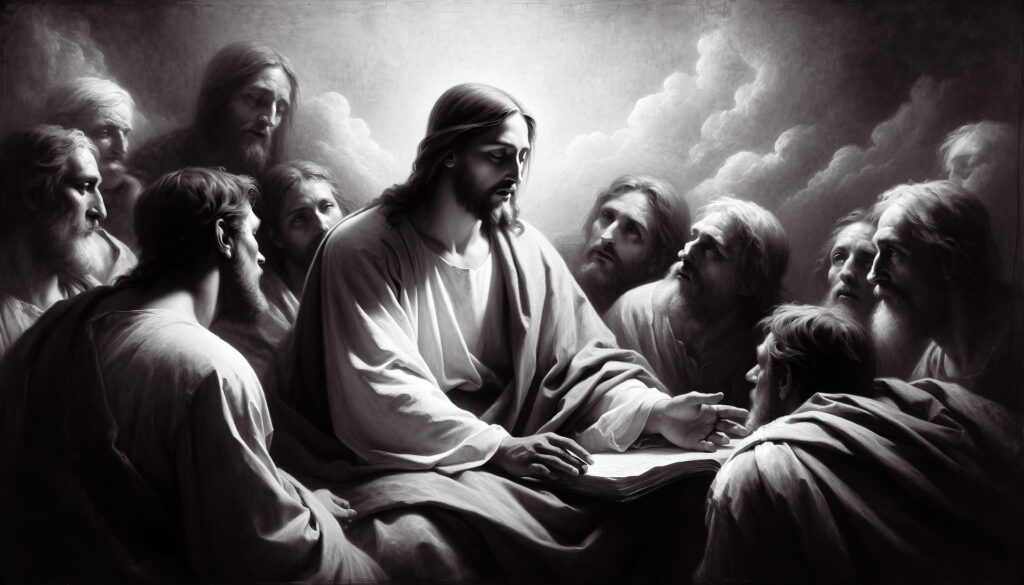

For centuries, religious dogma has framed the Last Supper as an emotional, mournful farewell gathering—a passive final meal shared between a resigned teacher and twelve bewildered followers. But strip away the stained glass and the medieval liturgical overlays, and the raw diagnostic reveals something vastly different: a calculated boardroom transaction, an aggressive legal execution, and a biological overwrite of human history. When Christ sat down in that Upper Room, He was not simply partaking in an ancient ritual; He was systematically working through the architecture of the Passover Seder. Every Hebrew child understood the cadence of the Four Cups drawn from the covenant declarations of Exodus 6—Sanctification, Plagues, Redemption, and Praise. Yet Christ intentionally waited until "the cup after supper" (Luke 22:20). In the structural sequence of the meal, that was precisely the Third Cup: the Cup of Redemption. It was the legal cup designated to purchase a slave out of bondage. He took that specific vessel, held it up, and declared it to be the Diatheke in His blood.
To understand what hit the table that night, you have to understand the legal mechanics of the first century. A Diatheke is not a treaty where two parties negotiate terms; it is a Last Will and Testament—a unilateral document authored by one party to disperse an inheritance. Under the legal code cited in Hebrews 9:16–17, a testament carries zero binding force while the testator is alive; it requires, of legal necessity, the death of the one who drew it up. Under the Mosaic covenant, animal blood had been splashed against the altar as a provisional patch (Hebrews 10:4), but animal blood possessed neither the legal standing nor the biological authority to purge human debt. Christ entered the room operating in human flesh—the Last Adam (1 Corinthians 15:45)—carrying an uncorrupted bloodline untouched by the fallen seed of Adam or the ancient defilements documented from Genesis to the Enochic accounts of the Watchers. Leviticus 17:11 lays down the biological baseline: the life of the flesh is in the blood. Pure, uncompromised biological hardware was about to be laid on the line.
When religion lost this legal and biological blueprint, it invented mysticism to fill the void. By the Fourth Lateran Council in 1215 AD, institutional authorities introduced Transubstantiation, claiming that a priest’s ritual incantation physically transformed ordinary wine into literal hemoglobin and plasma. But a Berean who audits the source code immediately sees the violation: Torah law strictly forbidden the consumption of blood (Leviticus 17:14), a boundary firmly reaffirmed by the apostles in the council of Acts 15:20. Jesus sat at the table with every drop of His blood circulating within His own biological veins; He was not dispensing literal flesh to digest, but establishing a legal token of acceptance for a binding Will. His death the following afternoon on Golgotha legally probated the document, shattering the corrupted system and distributing an eternal estate to every designated heir.
Yet if the execution of this contract was so absolute, why do modern systems still operate as though humanity remains trapped in a provisional state? What if the religious cycles of guilt and animalistic self-atonement we cling to are nothing more than a refusal to acknowledge that the Will has already been probated? Is it possible that in mistaking a binding legal signature for a recurring mystical ritual, we have missed the biological reality of what was transferred? Am I sure my confidence rests in the probated signature of the Testator, or am I still trying to renegotiate a contract that was permanently settled two thousand years ago?