Welcome back to the table. When you subject the biblical text to the Berean diagnostic, you do not just find “good moral stories”—you find high-level legal, biological, and historical masterclasses.
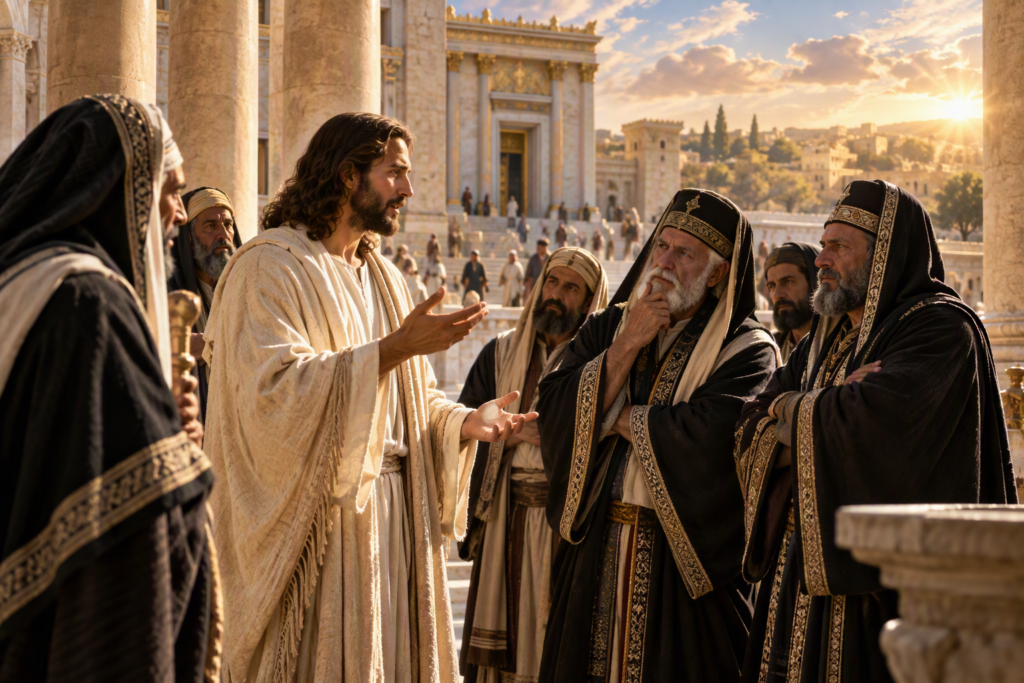
Let’s take a deep dive into “The SadduceesThe Sadducees were a wealthy, aristocratic Jewish sect during the Second Temple period, known for rejecting the resurrection, denying angels and spirits, and limiting their authority to the written Torah. Their confrontations with Jesus reveal theological blindness rooted in a restricted canon. More and the Resurrection” (recorded in , , and ). Just like the “Taxes to CaesarCaesar was the title used for the emperors of Rome, representing the highest political, military, and religious authority in the empire. In the New Testament, “Caesar” symbolizes earthly power, taxation, and imperial claims to divinity — forming the backdrop of Jesus’ teaching on allegiance in Matthew 22. More” trap, this was a highly calculated intellectual assassination attempt. But this time, it wasn’t about politics; it was about the “physics of the afterlife“ and the “legal constraints of the scriptural record“.
Here is the frame-by-frame breakdown of how JesusJesus of Nazareth, also called the Christ or the Messiah, is the central figure of the New Testament and the fulfillment of God’s redemptive plan. Born in the line of David, He taught with divine authority, performed miracles, and revealed the kingdom of God. More dismantled the intellectual elite of His day.
1. The Operatives: Who Were the Sadducees?
To understand the trap, we must understand the theology of the men setting it.
Historically, the SadduceesThe Sadducees were a wealthy, aristocratic Jewish sect during the Second Temple period, known for rejecting the resurrection, denying angels and spirits, and limiting their authority to the written Torah. Their confrontations with Jesus reveal theological blindness rooted in a restricted canon. More were the wealthy, aristocratic, ruling priestly class. They controlled the TempleThe Temple was the permanent house of worship built in Jerusalem to replace the Tabernacle as the central place of sacrifice, prayer, and covenant worship for Israel. It served as the dwelling place of God's presence among His people and became one of the most sacred locations in biblical history. The Temple pointed forward to the coming of the Messiah,... More complex in Jerusalem. But theologically, they were materialists.
(NIV) gives us their exact profile:
“The SadduceesThe Sadducees were a wealthy, aristocratic Jewish sect during the Second Temple period, known for rejecting the resurrection, denying angels and spirits, and limiting their authority to the written Torah. Their confrontations with Jesus reveal theological blindness rooted in a restricted canon. More say that there is no resurrectionResurrection is God’s act of raising the dead to new life — first seen in Christ’s victory over the grave, and ultimately fulfilled when all humanity is raised for judgment, transformation, and eternal destiny. More, and that there are neither angelsAngels are spiritual beings created by God to serve His purposes — messengers, guardians, warriors, and worshipers who carry out His will in both the heavenly realm and the earthly world. More nor spirits, but the PhariseesThe Pharisees were a prominent Jewish religious sect during the Second Temple period, known for their strict adherence to oral tradition, legal precision, and public displays of righteousness. They frequently clashed with Jesus, whose teachings exposed their hypocrisy, spiritual blindness, and misuse of Scripture. More believe all these things.”
The Canon Restriction: Why didn’t the SadduceesThe Sadducees were a wealthy, aristocratic Jewish sect during the Second Temple period, known for rejecting the resurrection, denying angels and spirits, and limiting their authority to the written Torah. Their confrontations with Jesus reveal theological blindness rooted in a restricted canon. More believe in the resurrectionResurrection is God’s act of raising the dead to new life — first seen in Christ’s victory over the grave, and ultimately fulfilled when all humanity is raised for judgment, transformation, and eternal destiny. More? Because they operated on a restricted laws and doctrine. They only accepted the TorahTorah refers to the first five books of the Bible — Genesis, Exodus, Leviticus, Numbers, and Deuteronomy. It contains God’s foundational revelation to Israel: creation, covenant, law, worship, and identity. In Scripture, the Torah is the bedrock of all later revelation and the source Jesus cites when teaching the Greatest Commandment. More (the first five books of MosesMoses was the great prophet, lawgiver, and leader chosen by God to deliver the children of Israel from slavery in Egypt. Through Moses, God gave the Law, established the Old Covenant, and instructed the construction of the Tabernacle. More than any other figure in the Old Testament, Moses serves as a picture of God's deliverance, mediation, and faithfulness to His... More: Genesis through Deuteronomy) as absolute law. They rejected the ProphetsProphets were God’s chosen messengers who spoke His word to Israel, calling the people to repentance, revealing God’s will, and announcing future events. In Scripture, “the Prophets” also refers to the second major division of the Hebrew Bible, which expands and applies the Torah’s covenant truths. More (like Isaiah and Daniel) and the historical writings. Since the concept of a bodily resurrectionResurrection is God’s act of raising the dead to new life — first seen in Christ’s victory over the grave, and ultimately fulfilled when all humanity is raised for judgment, transformation, and eternal destiny. More is not explicitly detailed in the first five books, they concluded it was a myth.
2. The Trap: The Biological Riddle of Levirate Law
Because they didn’t believe in the resurrectionResurrection is God’s act of raising the dead to new life — first seen in Christ’s victory over the grave, and ultimately fulfilled when all humanity is raised for judgment, transformation, and eternal destiny. More, the SadduceesThe Sadducees were a wealthy, aristocratic Jewish sect during the Second Temple period, known for rejecting the resurrection, denying angels and spirits, and limiting their authority to the written Torah. Their confrontations with Jesus reveal theological blindness rooted in a restricted canon. More thought the concept was absurd. To prove it, they designed a legal and biological riddle based on a law they knew JesusJesus of Nazareth, also called the Christ or the Messiah, is the central figure of the New Testament and the fulfillment of God’s redemptive plan. Born in the line of David, He taught with divine authority, performed miracles, and revealed the kingdom of God. More respected.
They quote (Levirate Marriage), which states that if a man dies childless, his brother must marry the widow to produce an heir to keep the family line and property intact.
In (KJV), they present their hypothetical scenario:
“Now there were with us seven brethren: and the first, when he had married a wife, deceased, and, having no issue, left his wife unto his brother: Likewise the second also, and the third, unto the seventh. And last of all the woman died also. Therefore in the resurrectionResurrection is God’s act of raising the dead to new life — first seen in Christ’s victory over the grave, and ultimately fulfilled when all humanity is raised for judgment, transformation, and eternal destiny. More whose wife shall she be of the seven? for they all had her.”
It’s a brilliant, mocking trap. They are assuming that ifthere is a resurrectionResurrection is God’s act of raising the dead to new life — first seen in Christ’s victory over the grave, and ultimately fulfilled when all humanity is raised for judgment, transformation, and eternal destiny. More, it is simply a continuation of the First Adam’s biology. If the next life runs on the same physical laws as this one, having one woman married to seven men simultaneously in heaven would violate the laws of adultery. To the SadduceesThe Sadducees were a wealthy, aristocratic Jewish sect during the Second Temple period, known for rejecting the resurrection, denying angels and spirits, and limiting their authority to the written Torah. Their confrontations with Jesus reveal theological blindness rooted in a restricted canon. More, this “proved” the resurrectionResurrection is God’s act of raising the dead to new life — first seen in Christ’s victory over the grave, and ultimately fulfilled when all humanity is raised for judgment, transformation, and eternal destiny. More was a logical impossibility.
3. The Biological Override: The Divine Order
The Biological Physics: Why does marriage and reproduction exist in the current age? Because the death rate is 100%. If humanity does not reproduce, the species goes extinct. Procreation is the biological necessityto counter corruption and death. But JesusJesus of Nazareth, also called the Christ or the Messiah, is the central figure of the New Testament and the fulfillment of God’s redemptive plan. Born in the line of David, He taught with divine authority, performed miracles, and revealed the kingdom of God. More states that in the resurrectionResurrection is God’s act of raising the dead to new life — first seen in Christ’s victory over the grave, and ultimately fulfilled when all humanity is raised for judgment, transformation, and eternal destiny. More, the physical being is transformed to spiritual being (). Because the glorified body “can no longer die,” the biological necessity for reproduction ceases.
He uses the Greek word Isangelos (equal to angelsAngels are spiritual beings created by God to serve His purposes — messengers, guardians, warriors, and worshipers who carry out His will in both the heavenly realm and the earthly world. More). If we consult the Ethiopian CanonThe Ethiopian Canon is the largest and most ancient Christian biblical canon still in use, preserving books long lost in Western traditions and maintaining a textual lineage rooted in early Ge’ez manuscripts. More, 1 EnochEnoch is the pre‑Flood patriarch who “walked with God” and was taken without seeing death. In biblical theology, he becomes the earliest prophetic witness to the rebellion of the Watchers, the coming judgment, and the structure of the unseen realm. More 15 perfectly aligns with this. God rebukes the fallen WatchersWatchers are high‑ranking sons of God (bene elohim) who oversee nations and realms in the biblical cosmic‑geography worldview. Some remained loyal to YHVH, while others rebelled — including the Genesis 6 Watchers who violated boundaries and produced the Nephilim. More by telling them that because they were created eternal and immortal, they were never given permission to violate the human beings—which is why their incursion with human women was such a severe violation of the Divine Order of God.
JesusJesus of Nazareth, also called the Christ or the Messiah, is the central figure of the New Testament and the fulfillment of God’s redemptive plan. Born in the line of David, He taught with divine authority, performed miracles, and revealed the kingdom of God. More destroys the Sadducees’ trap by explaining that the Kingdom of God does not run on the corruptible, reproductive biology of the current age.
The Divine Order of the Resurrection
JesusJesus of Nazareth, also called the Christ or the Messiah, is the central figure of the New Testament and the fulfillment of God’s redemptive plan. Born in the line of David, He taught with divine authority, performed miracles, and revealed the kingdom of God. More does not debate the Sadducees’ hypothetical mathematics. Instead, He immediately identifies their two fundamental errors.
(KJV):
“JesusJesus of Nazareth, also called the Christ or the Messiah, is the central figure of the New Testament and the fulfillment of God’s redemptive plan. Born in the line of David, He taught with divine authority, performed miracles, and revealed the kingdom of God. More answered and said unto them, Ye do err, not knowing the scriptures, nor the power of God.”
He then reveals that the resurrectionResurrection is God’s act of raising the dead to new life — first seen in Christ’s victory over the grave, and ultimately fulfilled when all humanity is raised for judgment, transformation, and eternal destiny. More is not merely a continuation of earthly life under improved conditions. It is entrance into a different order of existence.
(NIV):
“JesusJesus of Nazareth, also called the Christ or the Messiah, is the central figure of the New Testament and the fulfillment of God’s redemptive plan. Born in the line of David, He taught with divine authority, performed miracles, and revealed the kingdom of God. More replied, ‘The people of this age marry and are given in marriage. But those who are considered worthy of taking part in the age to come and in the resurrectionResurrection is God’s act of raising the dead to new life — first seen in Christ’s victory over the grave, and ultimately fulfilled when all humanity is raised for judgment, transformation, and eternal destiny. More from the dead will neither marry nor be given in marriage, and they can no longer die; for they are like the angelsAngels are spiritual beings created by God to serve His purposes — messengers, guardians, warriors, and worshipers who carry out His will in both the heavenly realm and the earthly world. More. They are God’s children, since they are children of the resurrectionResurrection is God’s act of raising the dead to new life — first seen in Christ’s victory over the grave, and ultimately fulfilled when all humanity is raised for judgment, transformation, and eternal destiny. More.'”
JesusJesus of Nazareth, also called the Christ or the Messiah, is the central figure of the New Testament and the fulfillment of God’s redemptive plan. Born in the line of David, He taught with divine authority, performed miracles, and revealed the kingdom of God. More explains that marriage belongs to the present age. The resurrected neither marry nor are given in marriage because they are no longer subject to death. Having been raised into immortality, they become like the angelsAngels are spiritual beings created by God to serve His purposes — messengers, guardians, warriors, and worshipers who carry out His will in both the heavenly realm and the earthly world. More in this respect and participate in the heavenly order established by God. The SadduceesThe Sadducees were a wealthy, aristocratic Jewish sect during the Second Temple period, known for rejecting the resurrection, denying angels and spirits, and limiting their authority to the written Torah. Their confrontations with Jesus reveal theological blindness rooted in a restricted canon. More assumed that the resurrectionResurrection is God’s act of raising the dead to new life — first seen in Christ’s victory over the grave, and ultimately fulfilled when all humanity is raised for judgment, transformation, and eternal destiny. More would simply continue earthly relationships exactly as they exist now. JesusJesus of Nazareth, also called the Christ or the Messiah, is the central figure of the New Testament and the fulfillment of God’s redemptive plan. Born in the line of David, He taught with divine authority, performed miracles, and revealed the kingdom of God. More teaches that the coming Kingdom operates according to a different order, one defined by immortality and resurrectionResurrection is God’s act of raising the dead to new life — first seen in Christ’s victory over the grave, and ultimately fulfilled when all humanity is raised for judgment, transformation, and eternal destiny. More life rather than mortality and death.
Comparison with 1 Enoch
This idea closely parallels the argument found in 1 EnochEnoch is the pre‑Flood patriarch who “walked with God” and was taken without seeing death. In biblical theology, he becomes the earliest prophetic witness to the rebellion of the Watchers, the coming judgment, and the structure of the unseen realm. More 15, where God rebukes the WatchersWatchers are high‑ranking sons of God (bene elohim) who oversee nations and realms in the biblical cosmic‑geography worldview. Some remained loyal to YHVH, while others rebelled — including the Genesis 6 Watchers who violated boundaries and produced the Nephilim. More for abandoning the order for which they were created.
In EnochEnoch is the pre‑Flood patriarch who “walked with God” and was taken without seeing death. In biblical theology, he becomes the earliest prophetic witness to the rebellion of the Watchers, the coming judgment, and the structure of the unseen realm. More, the WatchersWatchers are high‑ranking sons of God (bene elohim) who oversee nations and realms in the biblical cosmic‑geography worldview. Some remained loyal to YHVH, while others rebelled — including the Genesis 6 Watchers who violated boundaries and produced the Nephilim. More are described as heavenly beings created for an eternal existence. Their sin was not merely that they took wives, but that they crossed a boundary established by God between the heavenly and earthly realms. They left their proper domain and participated in relationships that violated the order of creation.
Jesus’ statement in reflects the same principle. The resurrected belong to the heavenly order and therefore do not participate in marriage. The emphasis is not on inability but on the divinely established structure of the age to come.
What This Does Not Mean
JesusJesus of Nazareth, also called the Christ or the Messiah, is the central figure of the New Testament and the fulfillment of God’s redemptive plan. Born in the line of David, He taught with divine authority, performed miracles, and revealed the kingdom of God. More does not say that spiritual beings are biologically incapable of reproduction. Neither nor 1 EnochEnoch is the pre‑Flood patriarch who “walked with God” and was taken without seeing death. In biblical theology, he becomes the earliest prophetic witness to the rebellion of the Watchers, the coming judgment, and the structure of the unseen realm. More 15 makes that claim.
The issue in both passages is one of God’s order, not biological possibility.
(KJV)
“There were giants in the earth in those days; and also after that, when the sons of GodSons of God refers to spiritual beings who belong to God’s heavenly realm and serve within His divine council. In Scripture, the term describes non‑human, heavenly entities who act as watchers, messengers, and participants in God’s governance of creation. They appear in key passages such as Genesis 6, Job 1–2, and Psalm 82, revealing the structure and activity of the... More came in unto the daughters of men, and they bare children to them, the same became mighty men which were of old, men of renown.”
Scripture records the existence of the Nephilim in and later giant clans within the biblical narrative. Likewise, 1 EnochEnoch is the pre‑Flood patriarch who “walked with God” and was taken without seeing death. In biblical theology, he becomes the earliest prophetic witness to the rebellion of the Watchers, the coming judgment, and the structure of the unseen realm. More presents the WatchersWatchers are high‑ranking sons of God (bene elohim) who oversee nations and realms in the biblical cosmic‑geography worldview. Some remained loyal to YHVH, while others rebelled — including the Genesis 6 Watchers who violated boundaries and produced the Nephilim. More as producing offspring after violating God’s command. Whether one accepts the Enochic explanation in whole or in part, these texts describe an actual transgression with actual consequences. The sin is portrayed as an unlawful crossing of boundaries established by God, not as an attempt to do something that was inherently impossible.
Therefore, should not be used to teach that spiritual beings are incapable of reproduction. Jesus’ point is that resurrected humanity will no longer participate in marriage because they will belong to the immortal order of the resurrectionResurrection is God’s act of raising the dead to new life — first seen in Christ’s victory over the grave, and ultimately fulfilled when all humanity is raised for judgment, transformation, and eternal destiny. More. The focus of the passage is the nature of the coming age, not the biological limitations of spiritual beings.
4. The Scriptural Checkmate: The Grammar of God
Having addressed the “Power of God” (biological transformation), JesusJesus of Nazareth, also called the Christ or the Messiah, is the central figure of the New Testament and the fulfillment of God’s redemptive plan. Born in the line of David, He taught with divine authority, performed miracles, and revealed the kingdom of God. More now addresses their ignorance of the “scriptures.”
This is where God (the Master Architect) shows His absolute genius. JesusJesus of Nazareth, also called the Christ or the Messiah, is the central figure of the New Testament and the fulfillment of God’s redemptive plan. Born in the line of David, He taught with divine authority, performed miracles, and revealed the kingdom of God. More could have easily quoted or to prove the resurrectionResurrection is God’s act of raising the dead to new life — first seen in Christ’s victory over the grave, and ultimately fulfilled when all humanity is raised for judgment, transformation, and eternal destiny. More. But He doesn’t. Why? Because the SadduceesThe Sadducees were a wealthy, aristocratic Jewish sect during the Second Temple period, known for rejecting the resurrection, denying angels and spirits, and limiting their authority to the written Torah. Their confrontations with Jesus reveal theological blindness rooted in a restricted canon. More rejected those books. If He quoted Daniel, they would have dismissed it.
He forces them onto their own restricted turf. He quotes from the one book they revere above all others: Exodus.
(KJV):
“But as touching the resurrectionResurrection is God’s act of raising the dead to new life — first seen in Christ’s victory over the grave, and ultimately fulfilled when all humanity is raised for judgment, transformation, and eternal destiny. More of the dead, have ye not read that which was spoken unto you by God, saying, I am the God of AbrahamAbraham is the first patriarch of Israel, called by God to leave his homeland and become the father of a covenant people. His life marks the beginning of God’s redemptive plan through promise, faith, and obedience. More, and the God of IsaacIsaac is the promised son of Abraham and Sarah, born through God’s covenant and central to the unfolding of Israel’s story. His life represents continuity, faith, and the fulfillment of divine promise. More, and the God of JacobJacob is the third patriarch of Israel, the son of Isaac and Rebekah, whose life marks the turning point where God’s covenant promises move from a single family toward the beginnings of a nation. His story is one of struggle, transformation, and divine purpose. More? God is not the God of the dead, but of the living.”
Look at the surgical precision of the grammar. JesusJesus of Nazareth, also called the Christ or the Messiah, is the central figure of the New Testament and the fulfillment of God’s redemptive plan. Born in the line of David, He taught with divine authority, performed miracles, and revealed the kingdom of God. More quotes God speaking to MosesMoses was the great prophet, lawgiver, and leader chosen by God to deliver the children of Israel from slavery in Egypt. Through Moses, God gave the Law, established the Old Covenant, and instructed the construction of the Tabernacle. More than any other figure in the Old Testament, Moses serves as a picture of God's deliverance, mediation, and faithfulness to His... More at the burning bush. When God spoke to MosesMoses was the great prophet, lawgiver, and leader chosen by God to deliver the children of Israel from slavery in Egypt. Through Moses, God gave the Law, established the Old Covenant, and instructed the construction of the Tabernacle. More than any other figure in the Old Testament, Moses serves as a picture of God's deliverance, mediation, and faithfulness to His... More, AbrahamAbraham is the first patriarch of Israel, called by God to leave his homeland and become the father of a covenant people. His life marks the beginning of God’s redemptive plan through promise, faith, and obedience. More had been physically dead and buried in a cave for roughly 400 years. Yet God did not say, “I WAS the God of AbrahamAbraham is the first patriarch of Israel, called by God to leave his homeland and become the father of a covenant people. His life marks the beginning of God’s redemptive plan through promise, faith, and obedience. More.” He used the present tense: “I AM the God of AbrahamAbraham is the first patriarch of Israel, called by God to leave his homeland and become the father of a covenant people. His life marks the beginning of God’s redemptive plan through promise, faith, and obedience. More.”
The grammatical logic is absolute: The Creator cannot be in an active, present-tense covenant relationship with a pile of dust. Therefore, AbrahamAbraham is the first patriarch of Israel, called by God to leave his homeland and become the father of a covenant people. His life marks the beginning of God’s redemptive plan through promise, faith, and obedience. More, IsaacIsaac is the promised son of Abraham and Sarah, born through God’s covenant and central to the unfolding of Israel’s story. His life represents continuity, faith, and the fulfillment of divine promise. More, and JacobJacob is the third patriarch of Israel, the son of Isaac and Rebekah, whose life marks the turning point where God’s covenant promises move from a single family toward the beginnings of a nation. His story is one of struggle, transformation, and divine purpose. More muststill be consciously existing in another dimension, awaiting their physical resurrectionResurrection is God’s act of raising the dead to new life — first seen in Christ’s victory over the grave, and ultimately fulfilled when all humanity is raised for judgment, transformation, and eternal destiny. More.
With one present-tense verb from the Book of Exodus, JesusJesus of Nazareth, also called the Christ or the Messiah, is the central figure of the New Testament and the fulfillment of God’s redemptive plan. Born in the line of David, He taught with divine authority, performed miracles, and revealed the kingdom of God. More completely demolished the Sadducees’ entire theological platform. logs the result: “And when the multitude heard this, they were astonished at his doctrine.” The SadduceesThe Sadducees were a wealthy, aristocratic Jewish sect during the Second Temple period, known for rejecting the resurrection, denying angels and spirits, and limiting their authority to the written Torah. Their confrontations with Jesus reveal theological blindness rooted in a restricted canon. More were silenced permanently.
Study Method & Memory Tool: A.L.I.V.E.
To lock this masterclass of logic, biology, and scripture into your memory so you can easily quote and explain it, use the acronym A.L.I.V.E.
-
A – Aristocrats (The SadduceesThe Sadducees were a wealthy, aristocratic Jewish sect during the Second Temple period, known for rejecting the resurrection, denying angels and spirits, and limiting their authority to the written Torah. Their confrontations with Jesus reveal theological blindness rooted in a restricted canon. More): They were the wealthy elite who controlled the TempleThe Temple was the permanent house of worship built in Jerusalem to replace the Tabernacle as the central place of sacrifice, prayer, and covenant worship for Israel. It served as the dwelling place of God's presence among His people and became one of the most sacred locations in biblical history. The Temple pointed forward to the coming of the Messiah,... More, denied the supernatural (angelsAngels are spiritual beings created by God to serve His purposes — messengers, guardians, warriors, and worshipers who carry out His will in both the heavenly realm and the earthly world. More/spirits), and restricted their Bible strictly to the TorahTorah refers to the first five books of the Bible — Genesis, Exodus, Leviticus, Numbers, and Deuteronomy. It contains God’s foundational revelation to Israel: creation, covenant, law, worship, and identity. In Scripture, the Torah is the bedrock of all later revelation and the source Jesus cites when teaching the Greatest Commandment. More.
-
L – Levirate Law Trap: . The riddle of the seven brothers was designed to make the resurrectionResurrection is God’s act of raising the dead to new life — first seen in Christ’s victory over the grave, and ultimately fulfilled when all humanity is raised for judgment, transformation, and eternal destiny. More look mathematically and legally absurd.
-
I – Isangeloi (Equal to AngelsAngels are spiritual beings created by God to serve His purposes — messengers, guardians, warriors, and worshipers who carry out His will in both the heavenly realm and the earthly world. More): . The biological upgrade. Because the glorified body cannot die, the biological necessity for reproduction (marriage) is removed.
-
V – Verb Tense Checkmate: “I AM.” JesusJesus of Nazareth, also called the Christ or the Messiah, is the central figure of the New Testament and the fulfillment of God’s redemptive plan. Born in the line of David, He taught with divine authority, performed miracles, and revealed the kingdom of God. More bypasses the ProphetsProphets were God’s chosen messengers who spoke His word to Israel, calling the people to repentance, revealing God’s will, and announcing future events. In Scripture, “the Prophets” also refers to the second major division of the Hebrew Bible, which expands and applies the Torah’s covenant truths. More and uses a present-tense verb from to prove AbrahamAbraham is the first patriarch of Israel, called by God to leave his homeland and become the father of a covenant people. His life marks the beginning of God’s redemptive plan through promise, faith, and obedience. More still exists.
-
E – Exclusive to the TorahTorah refers to the first five books of the Bible — Genesis, Exodus, Leviticus, Numbers, and Deuteronomy. It contains God’s foundational revelation to Israel: creation, covenant, law, worship, and identity. In Scripture, the Torah is the bedrock of all later revelation and the source Jesus cites when teaching the Greatest Commandment. More: The tactical brilliance of JesusJesus of Nazareth, also called the Christ or the Messiah, is the central figure of the New Testament and the fulfillment of God’s redemptive plan. Born in the line of David, He taught with divine authority, performed miracles, and revealed the kingdom of God. More. He beat the top theological scholars in the nation using only the books they allowed in their restricted database.
When you apply the Berean standard, you see that JesusJesus of Nazareth, also called the Christ or the Messiah, is the central figure of the New Testament and the fulfillment of God’s redemptive plan. Born in the line of David, He taught with divine authority, performed miracles, and revealed the kingdom of God. More didn’t just win a religious debate. He executed a flawless, cross-disciplinary defense using biological physics and grammatical law.


