In Scripture, Paradise refers to the place of rest, joy, and divine fellowship reserved for the righteous after death. Before Christ’s resurrectionResurrection is God’s act of raising the dead to new life — first seen in Christ’s victory over the grave, and ultimately fulfilled when all humanity is raised for judgment, transformation, and eternal destiny. More, Paradise existed within SheolSheol is the ancient Hebrew term for the realm of the dead — a shadowy, silent, unseen place beneath the earth where all people go after death, both righteous and wicked. It is not equivalent to the later Christian concept of Hell, but the neutral holding place of the departed. More, in the compartment JesusJesus of Nazareth, also called the Christ or the Messiah, is the central figure of the New Testament and the fulfillment of God’s redemptive plan. Born in the line of David, He taught with divine authority, performed miracles, and revealed the kingdom of God. More calls Abraham’s BosomAbraham’s Bosom is the place of comfort within Sheol where the righteous dead were held before Christ’s resurrection. It is the Old Testament “Paradise,” later emptied when Jesus liberated the saints and relocated them to the Third Heaven. More (). It was the protected region where the saintsSaints are God’s covenant people — those set apart, made righteous by His provision, and belonging to Him by faith. In Scripture, the term describes both the righteous dead of the Old Testament and the redeemed living under the new covenant. More awaited the MessiahMessiah means “Anointed One,” the promised deliverer foretold throughout the Hebrew Scriptures. In the New Testament, Jesus is revealed as this Messiah — the fulfillment of prophecy, the bearer of God’s kingdom, and the one who accomplishes redemption through His life, death, and resurrection (Isaiah 9:6–7; Daniel 9:25; John 4:25–26). More, comforted and secure, yet not yet admitted into Heaven because Christ’s atoning work was not complete.
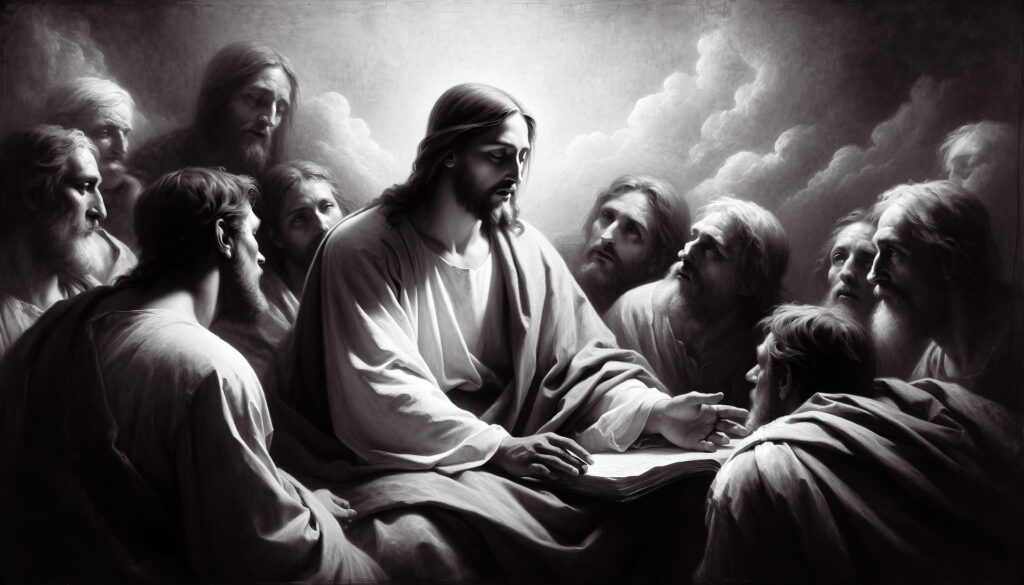
JesusJesus of Nazareth, also called the Christ or the Messiah, is the central figure of the New Testament and the fulfillment of God’s redemptive plan. Born in the line of David, He taught with divine authority, performed miracles, and revealed the kingdom of God. More confirms this structure when He tells the repentant thief on the cross, “Today you will be with Me in Paradise” (). At that moment, Paradise was still located in SheolSheol is the ancient Hebrew term for the realm of the dead — a shadowy, silent, unseen place beneath the earth where all people go after death, both righteous and wicked. It is not equivalent to the later Christian concept of Hell, but the neutral holding place of the departed. More — meaning Christ Himself entered the realm of the dead, not the final Heaven, immediately after His crucifixion.
Everything changes at the resurrectionResurrection is God’s act of raising the dead to new life — first seen in Christ’s victory over the grave, and ultimately fulfilled when all humanity is raised for judgment, transformation, and eternal destiny. More. Christ descends into the underworld, proclaims His victory, and “leads captivity captive” (). This phrase describes His liberation of the righteous dead from Abraham’s BosomAbraham’s Bosom is the place of comfort within Sheol where the righteous dead were held before Christ’s resurrection. It is the Old Testament “Paradise,” later emptied when Jesus liberated the saints and relocated them to the Third Heaven. More. He empties that compartment of SheolSheol is the ancient Hebrew term for the realm of the dead — a shadowy, silent, unseen place beneath the earth where all people go after death, both righteous and wicked. It is not equivalent to the later Christian concept of Hell, but the neutral holding place of the departed. More and relocates Paradise to the Third HeavenThe Third Heaven is the highest realm of God’s presence — the dwelling place of the Lord, the location of Paradise after Christ’s resurrection, and the destination of the redeemed upon death. More, the highest realm of God’s presence.
PaulPaul is the apostle who carried the message of Jesus into the Gentile world, transforming early Christianity through his missionary journeys, his letters, and his profound teaching on grace, faith, and the New Covenant. More confirms this relocation when he says he was “caught up into Paradise” (), identifying Paradise with the Third HeavenThe Third Heaven is the highest realm of God’s presence — the dwelling place of the Lord, the location of Paradise after Christ’s resurrection, and the destination of the redeemed upon death. More itself. From that moment forward, believers do not descend into SheolSheol is the ancient Hebrew term for the realm of the dead — a shadowy, silent, unseen place beneath the earth where all people go after death, both righteous and wicked. It is not equivalent to the later Christian concept of Hell, but the neutral holding place of the departed. More at death. They enter directly into the presence of the Lord ().
Paradise therefore has a two‑stage history:
- Before Christ’s resurrectionResurrection is God’s act of raising the dead to new life — first seen in Christ’s victory over the grave, and ultimately fulfilled when all humanity is raised for judgment, transformation, and eternal destiny. More — Paradise was inside SheolSheol is the ancient Hebrew term for the realm of the dead — a shadowy, silent, unseen place beneath the earth where all people go after death, both righteous and wicked. It is not equivalent to the later Christian concept of Hell, but the neutral holding place of the departed. More, in Abraham’s BosomAbraham’s Bosom is the place of comfort within Sheol where the righteous dead were held before Christ’s resurrection. It is the Old Testament “Paradise,” later emptied when Jesus liberated the saints and relocated them to the Third Heaven. More.
- After Christ’s resurrectionResurrection is God’s act of raising the dead to new life — first seen in Christ’s victory over the grave, and ultimately fulfilled when all humanity is raised for judgment, transformation, and eternal destiny. More — Paradise is in the Third HeavenThe Third Heaven is the highest realm of God’s presence — the dwelling place of the Lord, the location of Paradise after Christ’s resurrection, and the destination of the redeemed upon death. More, the realm of God’s throne.
This movement reflects the triumph of Christ over death and His authority to bring the saintsSaints are God’s covenant people — those set apart, made righteous by His provision, and belonging to Him by faith. In Scripture, the term describes both the righteous dead of the Old Testament and the redeemed living under the new covenant. More into the presence of God.
Because Paradise represents the comfort of the righteous and its relocation marks a major shift in afterlife geography, it naturally highlights several core realities:
- Originally located within SheolSheol is the ancient Hebrew term for the realm of the dead — a shadowy, silent, unseen place beneath the earth where all people go after death, both righteous and wicked. It is not equivalent to the later Christian concept of Hell, but the neutral holding place of the departed. More as Abraham’s BosomAbraham’s Bosom is the place of comfort within Sheol where the righteous dead were held before Christ’s resurrection. It is the Old Testament “Paradise,” later emptied when Jesus liberated the saints and relocated them to the Third Heaven. More ()
- Promised by JesusJesus of Nazareth, also called the Christ or the Messiah, is the central figure of the New Testament and the fulfillment of God’s redemptive plan. Born in the line of David, He taught with divine authority, performed miracles, and revealed the kingdom of God. More to the repentant thief ()
- Relocated when Christ “led captivity captive” ()
- Now situated in the Third HeavenThe Third Heaven is the highest realm of God’s presence — the dwelling place of the Lord, the location of Paradise after Christ’s resurrection, and the destination of the redeemed upon death. More ()
- The immediate destination of believers upon death ()