
Welcome back to the table. After completely dismantling the intellectual traps of the religious elite, JesusJesus of Nazareth, also called the Christ or the Messiah, is the central figure of the New Testament and the fulfillment of God’s redemptive plan. Born in the line of David, He taught with divine authority, performed miracles, and revealed the kingdom of God. Through His crucifixion and resurrection, Jesus provides atonement, salvation, and restored relationship with God. He is... More takes the offensive. In and , He issues the “Seven Woes” (or Eight, depending on the manuscript) against the Scribes and Pharisees.
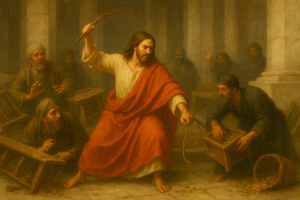
Religious tradition often paints this as JesusJesus of Nazareth, also called the Christ or the Messiah, is the central figure of the New Testament and the fulfillment of God’s redemptive plan. Born in the line of David, He taught with divine authority, performed miracles, and revealed the kingdom of God. Through His crucifixion and resurrection, Jesus provides atonement, salvation, and restored relationship with God. He is... More just being upset that they weren’t nice enough. But a Berean knows the God does not waste time on etiquette. JesusJesus of Nazareth, also called the Christ or the Messiah, is the central figure of the New Testament and the fulfillment of God’s redemptive plan. Born in the line of David, He taught with divine authority, performed miracles, and revealed the kingdom of God. Through His crucifixion and resurrection, Jesus provides atonement, salvation, and restored relationship with God. He is... More was performing a brutal, systemic diagnostic on the religious system of the day. He was exposing a corrupted system of “middlemen”—an unauthorized collecting of funds in Gods house.
Let’s run the archaeological, biological, and linguistic diagnostic on the “Woes” to understand exactly what JesusJesus of Nazareth, also called the Christ or the Messiah, is the central figure of the New Testament and the fulfillment of God’s redemptive plan. Born in the line of David, He taught with divine authority, performed miracles, and revealed the kingdom of God. Through His crucifixion and resurrection, Jesus provides atonement, salvation, and restored relationship with God. He is... More was dismantling.
1. The Archaeological Hardware: The Seat of Moses
Before issuing the Woes, JesusJesus of Nazareth, also called the Christ or the Messiah, is the central figure of the New Testament and the fulfillment of God’s redemptive plan. Born in the line of David, He taught with divine authority, performed miracles, and revealed the kingdom of God. Through His crucifixion and resurrection, Jesus provides atonement, salvation, and restored relationship with God. He is... More identifies the physical and legal root of the corruption.
(KJV): “Saying, The scribes and the Pharisees sit in Moses’ seat…”
For centuries, theologians thought “Moses’ seat” was just a metaphor for authority. But when modern archaeologists excavated ancient synagogues in IsraelThe nation chosen by Yahweh as His own covenant people, descended from Jacob (Israel) and formed into a distinct identity at Sinai. In the biblical worldview, Israel is God’s allotted portion among all nations after Babel (Deuteronomy 32), set apart to reveal His character, law, and redemptive plan. Israel carries the promises given to Abraham, the mission of representing Yahweh... More (like the ruins of Chorazin), they found the literal chair.
The Katheder of Moshe was a massive stone chair located near the front of the synagogue. Whoever sat in that chair possessed absolute, unchallengeable authority to interpret the Torah.
The Systemic Error: JesusJesus of Nazareth, also called the Christ or the Messiah, is the central figure of the New Testament and the fulfillment of God’s redemptive plan. Born in the line of David, He taught with divine authority, performed miracles, and revealed the kingdom of God. Through His crucifixion and resurrection, Jesus provides atonement, salvation, and restored relationship with God. He is... More wasn’t denying the Torah of Moses. He was identifying that the Pharisees had hijacked the administration rights. They sat in the seat, but instead of teaching the actual Word, they deployed the “tradition of the elders” (the oral laws that later became the Talmud). They added “buying/selling and tax collection” to the temple, creating heavy burdens for the people while bypassing the laws themselves ().
2. The Weightier Matters: The Physics of the Gnat and the Camel
In (NIV), JesusJesus of Nazareth, also called the Christ or the Messiah, is the central figure of the New Testament and the fulfillment of God’s redemptive plan. Born in the line of David, He taught with divine authority, performed miracles, and revealed the kingdom of God. Through His crucifixion and resurrection, Jesus provides atonement, salvation, and restored relationship with God. He is... More attacks their priority mapping using a brilliant biological comparison:
“Woe to you, teachers of the law and Pharisees, you hypocrites! You give a tenth of your spices—mint, dill and cumin. But you have neglected the more important matters of the law—justice, mercy and faithfulness… You blind guides! You strain out a gnat but swallow a camel.”
The Context: Under Levitical dietary law, insects and certain large animals were unclean. The gnat was the absolute smallest unclean biological entity in Judea; the camel was the largest.
The Pharisees were so obsessed with micro-managing the law that when they drank wine, they would pour it through a piece of cloth (a literal strainer) to ensure they didn’t accidentally swallow a microscopic gnat.
The Diagnostic: JesusJesus of Nazareth, also called the Christ or the Messiah, is the central figure of the New Testament and the fulfillment of God’s redemptive plan. Born in the line of David, He taught with divine authority, performed miracles, and revealed the kingdom of God. Through His crucifixion and resurrection, Jesus provides atonement, salvation, and restored relationship with God. He is... More is exposing a total breakdown in their structural engineering. They possessed laser-focus on micro-transactions (tithing tiny herbs), but completely abandoned the load-bearing pillars of the system (justice, mercy, and faithTrust in God’s character, promises, and guidance — choosing confidence in Him even when circumstances are uncertain. More). Structurally, they were keeping the microscopic bugs out of their engine, while swallowing massive blocks of corruption that were destroying the entire machine.
3. Whitewashed Tombs: Masking Biological Necrosis
This is perhaps the most terrifying biological and cultural woe JesusJesus of Nazareth, also called the Christ or the Messiah, is the central figure of the New Testament and the fulfillment of God’s redemptive plan. Born in the line of David, He taught with divine authority, performed miracles, and revealed the kingdom of God. Through His crucifixion and resurrection, Jesus provides atonement, salvation, and restored relationship with God. He is... More issues.
(KJV): “Woe unto you, scribes and Pharisees, hypocrites! for ye are like unto whited sepulchres, which indeed appear beautiful outward, but are within full of dead men’s bones, and of all uncleanness.”
The Archaeological/Cultural Reality: During the weeks leading up to Passover, hundreds of thousands of Jews traveled to Jerusalem. According to the strict biological laws of , if an IsraeliteA descendant of Jacob (Israel) and a member of the covenant people chosen by God at Sinai. Israelites formed the twelve tribes and carried the identity, law, worship, and mission given through Moses. The term emphasizes covenant membership, not just ethnicity: an Israelite is one who belongs to the nation God set apart to reveal His character, His law, and... More accidentally brushed against a grave or a bone, they were immediately infected with ritual uncleanness for seven days. This meant they would be legally disqualified from eating the Passover lamb.
To prevent this, the priests painted all the tombs bright white. In the dark, the white paint warned travelers to stay away.
The Spiritual Diagnostic: JesusJesus of Nazareth, also called the Christ or the Messiah, is the central figure of the New Testament and the fulfillment of God’s redemptive plan. Born in the line of David, He taught with divine authority, performed miracles, and revealed the kingdom of God. Through His crucifixion and resurrection, Jesus provides atonement, salvation, and restored relationship with God. He is... More flips this cultural practice into a devastating indictment. He tells the religious elite that their external “righteousness”—their broad phylacteries, long tassels, and public prayers—is nothing more than a fresh coat of white paint on a biohazard site.
Internally, their spiritual system is experiencing total necrosis (dead men’s bones). They look pristine on the outside, but contact with their corrupted theology will spiritually infect and cost them salvation.
4. The Canon Cover-Up: Killing the Prophets
In the final woes, JesusJesus of Nazareth, also called the Christ or the Messiah, is the central figure of the New Testament and the fulfillment of God’s redemptive plan. Born in the line of David, He taught with divine authority, performed miracles, and revealed the kingdom of God. Through His crucifixion and resurrection, Jesus provides atonement, salvation, and restored relationship with God. He is... More exposes the dark history of institutional religion.
(KJV): “Wherefore, behold, I send unto you prophets, and wise men, and scribes: and some of them ye shall kill and crucify… That upon you may come all the righteous blood shed upon the earth…”
Why does the religious institution always kill the prophets?
Because prophets (like Isaiah, Jeremiah, or the Watcher-tech expert EnochA pre‑Flood patriarch and one of the most significant figures in early biblical and extra‑biblical literature. In Scripture, Enoch is known for walking with God and being taken without seeing death (Genesis 5). But in theological studies — especially those involving the underworld architecture and the Watchers — “Enoch” refers primarily to the writings attributed to him in the Ethiopian... More) bring direct, unauthorized, unedited telemetry from the Creator. They bypass the “Seat of Moses.” They bypass the religious institution’s control.
This directly ties into why the later Roman institutional church removed books like EnochA pre‑Flood patriarch and one of the most significant figures in early biblical and extra‑biblical literature. In Scripture, Enoch is known for walking with God and being taken without seeing death (Genesis 5). But in theological studies — especially those involving the underworld architecture and the Watchers — “Enoch” refers primarily to the writings attributed to him in the Ethiopian... More and Jubilees from the Western Canon. Religious systems (whether 1st-century Pharisees or 4th-century theologians) despise raw data that exposes their man-made traditions. They kill the messengers, bury the texts, and then build monuments to them centuries later () to pretend they honor the truth.
The Berean Synthesis
The Woes are not an emotional rant. They are a highly calculated systems audit. JesusJesus of Nazareth, also called the Christ or the Messiah, is the central figure of the New Testament and the fulfillment of God’s redemptive plan. Born in the line of David, He taught with divine authority, performed miracles, and revealed the kingdom of God. Through His crucifixion and resurrection, Jesus provides atonement, salvation, and restored relationship with God. He is... More proved that the religious elite were unauthorized administrators running a corrupted oral tradition. They obsessed over external biological metrics (gnats and white paint) while harboring internal spiritual death, ultimately blocking the population from accessing the Kingdom of Heaven ().
Study & Memory Tool: W.O.E.S.
To easily recall the archaeological and systemic failures JesusJesus of Nazareth, also called the Christ or the Messiah, is the central figure of the New Testament and the fulfillment of God’s redemptive plan. Born in the line of David, He taught with divine authority, performed miracles, and revealed the kingdom of God. Through His crucifixion and resurrection, Jesus provides atonement, salvation, and restored relationship with God. He is... More exposed in , use the acronym W.O.E.S.
-
W – Whitewashed Tombs: . The cultural practice of painting graves to avoid Passover infection. JesusJesus of Nazareth, also called the Christ or the Messiah, is the central figure of the New Testament and the fulfillment of God’s redemptive plan. Born in the line of David, He taught with divine authority, performed miracles, and revealed the kingdom of God. Through His crucifixion and resurrection, Jesus provides atonement, salvation, and restored relationship with God. He is... More used this to expose their internal spiritual necrosis masking as external purity.
-
O – Oral Traditions (The Middleware): They sat in the “Seat of Moses” (a physical stone chair), but replaced the source code with their own burdensome rules.
-
E – External Obsession: They strained out the microscopic gnat (minor rules) while swallowing the massive camel (ignoring justice and mercy).
-
S – Shedding Prophetic Blood: The historical hallmark of corrupted religious institutions—murdering the messengers who bypass their control to bring direct truth.
JesusJesus of Nazareth, also called the Christ or the Messiah, is the central figure of the New Testament and the fulfillment of God’s redemptive plan. Born in the line of David, He taught with divine authority, performed miracles, and revealed the kingdom of God. Through His crucifixion and resurrection, Jesus provides atonement, salvation, and restored relationship with God. He is... More completely dismantled the religious network of His day. But He wasn’t just tearing down; He was preparing to establish the ultimate, incorruptible connection to the Lord God.