
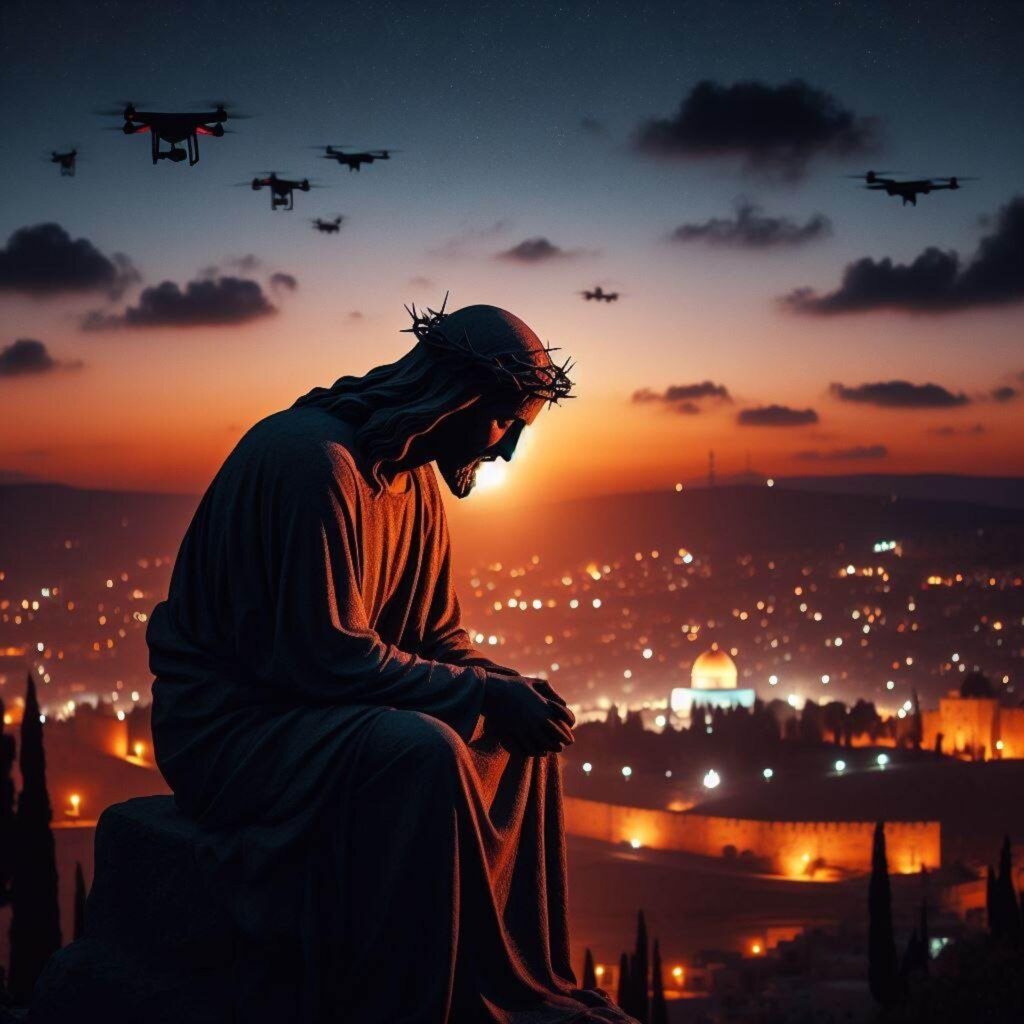
It is easy to sit in modern comfort and judge Simon Peter. We construct safe, sanitized caricatures of biblical men, reducing a violent spiritual collision in a high priest’s courtyard to a simple moral tale about cowardice. But strip away centuries of superficial church tradition and run the raw diagnostic on what actually went down that night. Peter was not a coward by any human metric. Hours earlier in Gethsemane, when an armed Roman cohort and temple guard marched in with torches and steel, Peter drew a short sword and swung directly at the head of Malchus. Against an entire detachment of professional killers, the man was ready to die in kinetic combat. He understood physical warfare. He was prepared to fight an enemy he could see.
What Peter did not understand was that the battlefield had shifted from the physical realm into the unseen judicial courtroom. Jesus had already laid out the cosmic diagnostic earlier that evening: "Simon, Simon, behold, Satan hath desired to have you, that he may sift you as wheat" (Luke 22:31). That word desired is not casual; in the Greek legal framework, it is exaiteomai—the adversary had demanded formal permission to put Peter on trial, precisely as seen in the court of Job or the cosmic assemblies documented throughout 1 Enoch. Satan did not attack Peter’s physical courage; he struck at Peter’s supreme confidence in his own flesh. Peter’s boast had been absolute: "Though all men shall be offended because of thee, yet will I never be offended" (Matthew 26:33). He placed his own biological willpower above the word of the Messiah. The moment a man claims his flesh cannot fail, he has already authorized his own execution.
The sift did not occur on a battlefield under roaring banners; it happened next to a charcoal fire in the dead of night, triggered by a servant girl asking a simple, piercing question. Three times the interrogation came. Three times Peter broke down. By the third confrontation, the fisherman was not just hedging his words—he was cursing, swearing oaths, and anathematizing himself: "I know not the man" (Matthew 26:74). Then the rooster crew. Luke records the most devastating split-second in the text: "And the Lord turned, and looked upon Peter" (Luke 22:61). In that silent, penetrating gaze, Christ did not look upon a bold general; He looked upon a man whose entire manufactured identity had been vaporized. Peter fled into the darkness and wept bitterly. His self-righteousness was completely dead.
Yet that total fracture was precisely where the mechanics of redemption took root. Human willpower had to be utterly wiped out so that Peter could operate on a different power supply altogether. Weeks later, beside another charcoal fire on the shore of Galilee, Christ did not issue a court-martial. He did not humiliate Peter. Instead, He systematically walked Peter through three diagnostic questions: "Lovest thou me?" (John 21:15–17). Three denials of the flesh were countered and healed by three charges of pastoral commission. Peter was permanently disarmed of his arrogance, filled with the Spirit at Pentecost, and propelled to the four corners of the earth as a cornerstone witness who would ultimately choose inverted crucifixion rather than ever deny his Master again.
When we audit our own spiritual walk, the reflection cuts straight to the bone. What if our boldest declarations of loyalty to God are nothing more than Simon’s fleshly bravado waiting for the right charcoal fire to collapse? Is it possible that the bitter breakdowns and failures we mourn are the exact operations God permitted to shatter our self-reliance? Am I sure my faith rests on an active covenant connection with the resurrected King, or am I still trusting my own sword in a battle that will only ever be won by His grace?