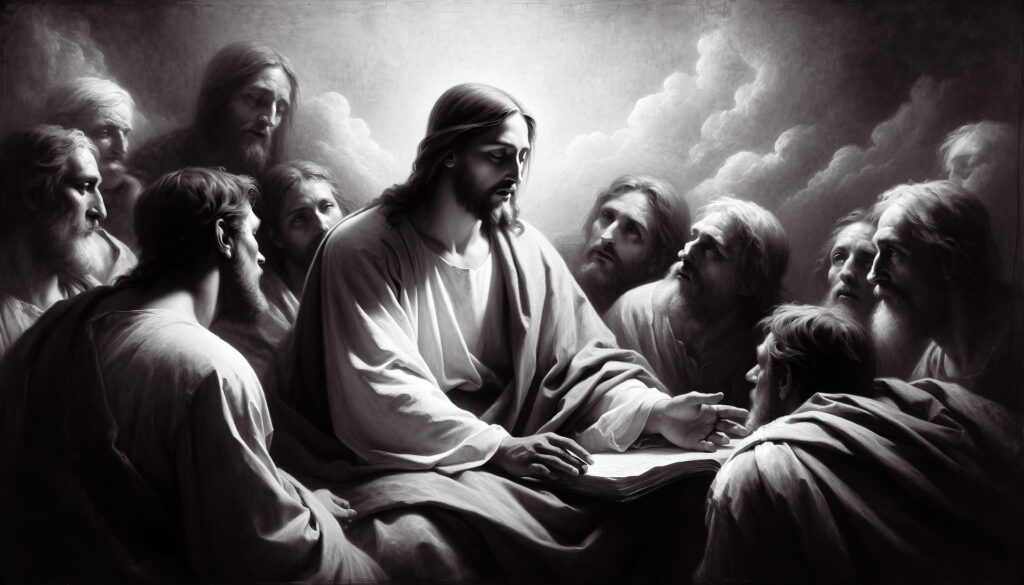
Son of God is one of the most significant titles applied to JesusJesus of Nazareth, also called the Christ or the Messiah, is the central figure of the New Testament and the fulfillment of God’s redemptive plan. Born in the line of David, He taught with divine authority, performed miracles, and revealed the kingdom of God. More in Scripture, expressing His unique relationship with the Father and His divine identity. Unlike the Old TestamentThe first major division of the Christian Bible, consisting of 39 books in the standard Protestant canon (and more in expanded canons such as the Ethiopian tradition). The Old Testament records God’s creation, covenants, laws, prophets, and the entire pre‑Messianic history of Israel. In the context of your page, the Old Testament provides the physics and architecture of the afterlife... More phrase “sons of GodSons of God refers to spiritual beings who belong to God’s heavenly realm and serve within His divine council. In Scripture, the term describes non‑human, heavenly entities who act as watchers, messengers, and participants in God’s governance of creation. They appear in key passages such as Genesis 6, Job 1–2, and Psalm 82, revealing the structure and activity of the... More,” which refers to heavenly beings or, at times, IsraelThe nation chosen by Yahweh as His own covenant people, descended from Jacob (Israel) and formed into a distinct identity at Sinai. In the biblical worldview, Israel is God’s allotted portion among all nations after Babel (Deuteronomy 32), set apart to reveal His character, law, and redemptive plan. Israel carries the promises given to Abraham, the mission of representing Yahweh... More as God’s covenant people, the New TestamentThe collection of 27 inspired books that record the fulfillment of God’s redemptive plan through Jesus Christ and the birth of the Church. The New Testament includes the Gospels, Acts, Epistles, and Revelation, forming the doctrinal foundation of Christian faith. In the context of your page, the New Testament provides the precise Greek vocabulary and legal framework needed to understand... More uses Son of God in a singular and exalted sense. It identifies JesusJesus of Nazareth, also called the Christ or the Messiah, is the central figure of the New Testament and the fulfillment of God’s redemptive plan. Born in the line of David, He taught with divine authority, performed miracles, and revealed the kingdom of God. More not merely as a messenger or representative but as the One who shares the very nature of God and reveals Him perfectly.
The title appears at key moments in Jesus’ life and ministry. At His baptism and transfiguration, the voice from heaven declares Him to be the beloved Son, affirming both His identity and His mission. Throughout the Gospels, JesusJesus of Nazareth, also called the Christ or the Messiah, is the central figure of the New Testament and the fulfillment of God’s redemptive plan. Born in the line of David, He taught with divine authority, performed miracles, and revealed the kingdom of God. More speaks of God as His Father in a way that distinguishes Him from all others, claiming a relationship that is eternal, intimate, and essential to His work. His miracles, authority over creation, and power to forgive sins further demonstrate the divine reality behind the title.
In the early church, “Son of God” became central to understanding Jesus’ role in salvation. The apostolic writings describe Him as the eternal Son who took on human flesh, revealing the Father and reconciling humanity through His death and resurrection. The title emphasizes that JesusJesus of Nazareth, also called the Christ or the Messiah, is the central figure of the New Testament and the fulfillment of God’s redemptive plan. Born in the line of David, He taught with divine authority, performed miracles, and revealed the kingdom of God. More is not simply chosen by God but of God — the One who makes the Father known and accomplishes redemption through His obedience and sacrifice.
Theologically, the title “Son of God” expresses Jesus’ divine origin, His authority as MessiahMessiah means “Anointed One,” the promised deliverer foretold throughout the Hebrew Scriptures. In the New Testament, Jesus is revealed as this Messiah — the fulfillment of prophecy, the bearer of God’s kingdom, and the one who accomplishes redemption through His life, death, and resurrection (Isaiah 9:6–7; Daniel 9:25; John 4:25–26). More, and His role as the mediator of the New Covenant. It affirms that the work of salvation is grounded not in human effort but in the eternal relationship between Father and Son. Through Christ, believers are brought into that relationship, becoming children of GodChildren of God refers to those who enter into a restored relationship with God through faith in Jesus Christ. Unlike the “Sons of God,” which describes heavenly beings, “Children of God” is a human identity granted by grace, marking believers as adopted into God’s family, renewed by the Spirit, and made heirs of His promises (John 1:12; Romans 8:14–17). More by grace rather than nature.
Across Scripture, “Son of God” stands as a declaration of who JesusJesus of Nazareth, also called the Christ or the Messiah, is the central figure of the New Testament and the fulfillment of God’s redemptive plan. Born in the line of David, He taught with divine authority, performed miracles, and revealed the kingdom of God. More is: the eternal Son who reveals the Father, fulfills the promises of Scripture, and brings redemption to the world.