
Welcome back to the table. For centuries, religious institutions have painted the Last Supper as a melancholy, passive farewell dinner. It was nothing of the sort. When we apply the legal definitions of the Greek text, the biological laws of Leviticus, and the archaeological structure of a 1st-century Passover, the Last Supper reveals itself as a highly calculated, legally binding contract signing and a biological system upgrade.
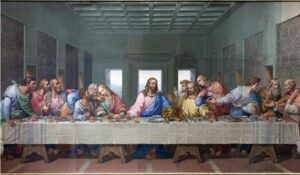
Let’s run the diagnostic on the exact mechanics of the New Covenant in His blood.
1. The Archaeological Setting: The Four Cups
To understand exactly when and how JesusJesus of Nazareth, also called the Christ or the Messiah, is the central figure of the New Testament and the fulfillment of God’s redemptive plan. Born in the line of David, He taught with divine authority, performed miracles, and revealed the kingdom of God. Through His crucifixion and resurrection, Jesus provides atonement, salvation, and restored relationship with God. He is... More executed this legal contract, we must look at the historical structure of a 1st-century Jewish Passover Seder.
During the Seder, the participants drink from four specific cups of wine. These cups are not random; they are mapped directly to the four “I Will” promises God made in regarding the deliverance of IsraelThe nation chosen by Yahweh as His own covenant people, descended from Jacob (Israel) and formed into a distinct identity at Sinai. In the biblical worldview, Israel is God’s allotted portion among all nations after Babel (Deuteronomy 32), set apart to reveal His character, law, and redemptive plan. Israel carries the promises given to Abraham, the mission of representing Yahweh... More from EgyptA major ancient civilization located southwest of Israel, centered along the Nile River. In Scripture, Egypt is known for its powerful kingdoms, advanced culture, and the setting of Israel’s bondage and Exodus. It often symbolizes strength, refuge, oppression, or deliverance, depending on the context. Egypt played a key role in biblical history, interacting with the patriarchs, prophets, and early Israel... More:
-
The Cup of Sanctification (“I will bring you out…”)
-
The Cup of Plagues/Deliverance (“I will free you…”)
-
The Cup of Redemption (“I will redeem you…”)
-
The Cup of Praise/Restoration (“I will take you as my own…”)
Now, look at the precise timing in:
(KJV):“Likewise also the cup after supper, saying, This cup is the new testamentThe collection of 27 inspired books that record the fulfillment of God’s redemptive plan through Jesus Christ and the birth of the Church. The New Testament includes the Gospels, Acts, Epistles, and Revelation, forming the doctrinal foundation of Christian faith. In the context of your page, the New Testament provides the precise Greek vocabulary and legal framework needed to understand... More in my blood, which is shed for you.”
Archaeologically and historically, the cup taken after the meal is exactly the Third Cup—The Cup of Redemption. JesusJesus of Nazareth, also called the Christ or the Messiah, is the central figure of the New Testament and the fulfillment of God’s redemptive plan. Born in the line of David, He taught with divine authority, performed miracles, and revealed the kingdom of God. Through His crucifixion and resurrection, Jesus provides atonement, salvation, and restored relationship with God. He is... More didn’t just pick up a random drink; He selected the exact cup that legally represented the purchase and redemption of a slave, and He repurposed it to execute the New Covenant.
2. The Legal Mechanics: The Diatheke Override
JesusJesus of Nazareth, also called the Christ or the Messiah, is the central figure of the New Testament and the fulfillment of God’s redemptive plan. Born in the line of David, He taught with divine authority, performed miracles, and revealed the kingdom of God. Through His crucifixion and resurrection, Jesus provides atonement, salvation, and restored relationship with God. He is... More calls this cup the “new testament” (or New Covenant). The Greek word used here is Diatheke (διαθήκη).
In 1st-century Roman and Greek law, a Diatheke was not a two-way negotiation. It was a Last Will and Testament—a unilateral contract drawn up by one person, which distributes their estate and inheritance.
But there is a strict, unbreakable legal requirement for a Diatheke to go into effect. We find the legal code in:
(KJV) “For where a testament is, there must also of necessity be the death of the testator. For a testament is of force after men are dead: otherwise it is of no strength at all while the testator liveth.”
How it legally overrides the Old Covenant:
The Old Covenant (instituted by Moses in ) was ratified by the blood of bulls and goats. But as states, it is biologically and legally impossible for the blood of an animal to permanently cancel the debt of a human being. The Old Covenant was a temporary patch; it only “covered” the error code, it didn’t delete it.
The New Covenant legally overrides it because the Testator (the Creator Himself, operating inside the biological hardware of the Last AdamA title for Jesus Christ, identifying Him as the final and decisive counterpart to the first Adam. Where the first Adam brought sin, death, and the loss of humanity’s original authority, Jesus — the Last Adam — brings resurrection, restoration, and the reclaiming of all territory lost through rebellion. In the Divine Council worldview, the Last Adam is the one... More) is shedding His own authorized human blood to execute the Will. Once the Testator dies on the cross the next day, the Will is legally probated, and the inheritance (eternal life) is immediately released to the beneficiaries.
3. The Biological Mechanics: Overwriting Corrupted Hardware
Why is blood the required signature on this legal document?
We must return to the biological law established in:
(KJV): “For the life of the flesh is in the blood: and I have given it to you upon the altar to make an atonement for your souls…”
In biblical biology, blood is the carrier of the life force and the genetic code.
-
The First Adam’s Blood: When the First Adam fell, his biological hardware was corrupted. logs that this corruption (sin and death) was transmitted genetically to all humanity. Every human born carries this corrupted biological signature.
-
The Last Adam’s Blood: JesusJesus of Nazareth, also called the Christ or the Messiah, is the central figure of the New Testament and the fulfillment of God’s redemptive plan. Born in the line of David, He taught with divine authority, performed miracles, and revealed the kingdom of God. Through His crucifixion and resurrection, Jesus provides atonement, salvation, and restored relationship with God. He is... More (the Last AdamA title for Jesus Christ, identifying Him as the final and decisive counterpart to the first Adam. Where the first Adam brought sin, death, and the loss of humanity’s original authority, Jesus — the Last Adam — brings resurrection, restoration, and the reclaiming of all territory lost through rebellion. In the Divine Council worldview, the Last Adam is the one... More – ) possessed uncorrupted biology. Because He was conceived via the Holy Spirit (bypassing the corrupted human paternal genetics), His blood was pure, untainted by the First Adam’s fall or the Watcher incursion of .
When JesusJesus of Nazareth, also called the Christ or the Messiah, is the central figure of the New Testament and the fulfillment of God’s redemptive plan. Born in the line of David, He taught with divine authority, performed miracles, and revealed the kingdom of God. Through His crucifixion and resurrection, Jesus provides atonement, salvation, and restored relationship with God. He is... More says, “This cup is the new testamentThe collection of 27 inspired books that record the fulfillment of God’s redemptive plan through Jesus Christ and the birth of the Church. The New Testament includes the Gospels, Acts, Epistles, and Revelation, forming the doctrinal foundation of Christian faith. In the context of your page, the New Testament provides the precise Greek vocabulary and legal framework needed to understand... More in my blood,” He is offering a biological exchange. By accepting the terms of the covenant, the believer’s corrupted, dying life-source is legally overwritten by the uncorrupted, eternal life-source of the Last AdamA title for Jesus Christ, identifying Him as the final and decisive counterpart to the first Adam. Where the first Adam brought sin, death, and the loss of humanity’s original authority, Jesus — the Last Adam — brings resurrection, restoration, and the reclaiming of all territory lost through rebellion. In the Divine Council worldview, the Last Adam is the one... More.
4. The Institutional Audit: The Invention of Transubstantiation
If this was a brilliant, legally binding contract signing, why did it become so weirdly mystical in modern religion?
We have to audit the history. In 1215 AD, at the Fourth Lateran Council, the Roman institutional church officially codified a doctrine called Transubstantiation. They claimed that the moment a priest blessed the wine, it literally, physically transformed into the actual hemoglobin and plasma of JesusJesus of Nazareth, also called the Christ or the Messiah, is the central figure of the New Testament and the fulfillment of God’s redemptive plan. Born in the line of David, He taught with divine authority, performed miracles, and revealed the kingdom of God. Through His crucifixion and resurrection, Jesus provides atonement, salvation, and restored relationship with God. He is... More Christ, and that the congregation was drinking literal blood.
A Berean knows this is a severe violation of the Source Code.
-
and strictly forbid the drinking of actual blood. The Creator would never command His disciples to violate His own biological laws.
-
JesusJesus of Nazareth, also called the Christ or the Messiah, is the central figure of the New Testament and the fulfillment of God’s redemptive plan. Born in the line of David, He taught with divine authority, performed miracles, and revealed the kingdom of God. Through His crucifixion and resurrection, Jesus provides atonement, salvation, and restored relationship with God. He is... More was physically sitting at the table with His blood fully intact inside His veins when He handed them the cup.
The institutional church took a high-level legal signature and turned it into a pagan, mystical ritual. The cup is a legal token, a physical signature of acceptance of the Diatheke. You are not digesting physical blood; you are legally signing the Last Will and Testament of the Creator.
Study & Memory Tool: C.U.P.S.
To easily recall and explain the legal and biological mechanics of the Last Supper without falling into religious tradition, use the acronym C.U.P.S.
-
C – Cup of Redemption: . JesusJesus of Nazareth, also called the Christ or the Messiah, is the central figure of the New Testament and the fulfillment of God’s redemptive plan. Born in the line of David, He taught with divine authority, performed miracles, and revealed the kingdom of God. Through His crucifixion and resurrection, Jesus provides atonement, salvation, and restored relationship with God. He is... More specifically utilized the 3rd cup of the Passover Seder, which historically represented deliverance and purchase.
-
U – Uncorrupted Biology: . The life is in the blood. The Last Adam’s blood was the only uncorrupted genetic material authorized to pay the biological debt.
-
P – Probating the Will (Diatheke): . A Last Will and Testament is only legally enforced after the death of the Testator. The cross activated the contract.
-
S – System Override: The pure blood of the Creator permanently overrides and replaces the temporary animal-blood patch of the Old Covenant (Moses).
The Last Supper was the ultimate boardroom negotiation. JesusJesus of Nazareth, also called the Christ or the Messiah, is the central figure of the New Testament and the fulfillment of God’s redemptive plan. Born in the line of David, He taught with divine authority, performed miracles, and revealed the kingdom of God. Through His crucifixion and resurrection, Jesus provides atonement, salvation, and restored relationship with God. He is... More laid the final contract on the table, signed it with His own authorized biology, and prepared to execute it the very next day.